
A REST API for forex data returns real-time currency exchange rates through HTTP endpoints that developers integrate into trading apps, fintech platforms, and tourism systems. Most forex APIs support 200-2000 currency pairs and return JSON responses with bid, ask, open, high, low, and close prices. The best free forex API in 2026 is one that combines wide coverage, technical indicators, and WebSocket support without charging $50/month like Alpha Vantage.
- What the NZD/CAD Data Shows Right Now
- How to Fetch Real-Time Forex Rates for Developers
- Best Free Forex API for Tourism Integration in 2026
- WebSocket vs REST API: Which One to Use
- Frequently Asked Questions
What the NZD/CAD Data Shows Right Now
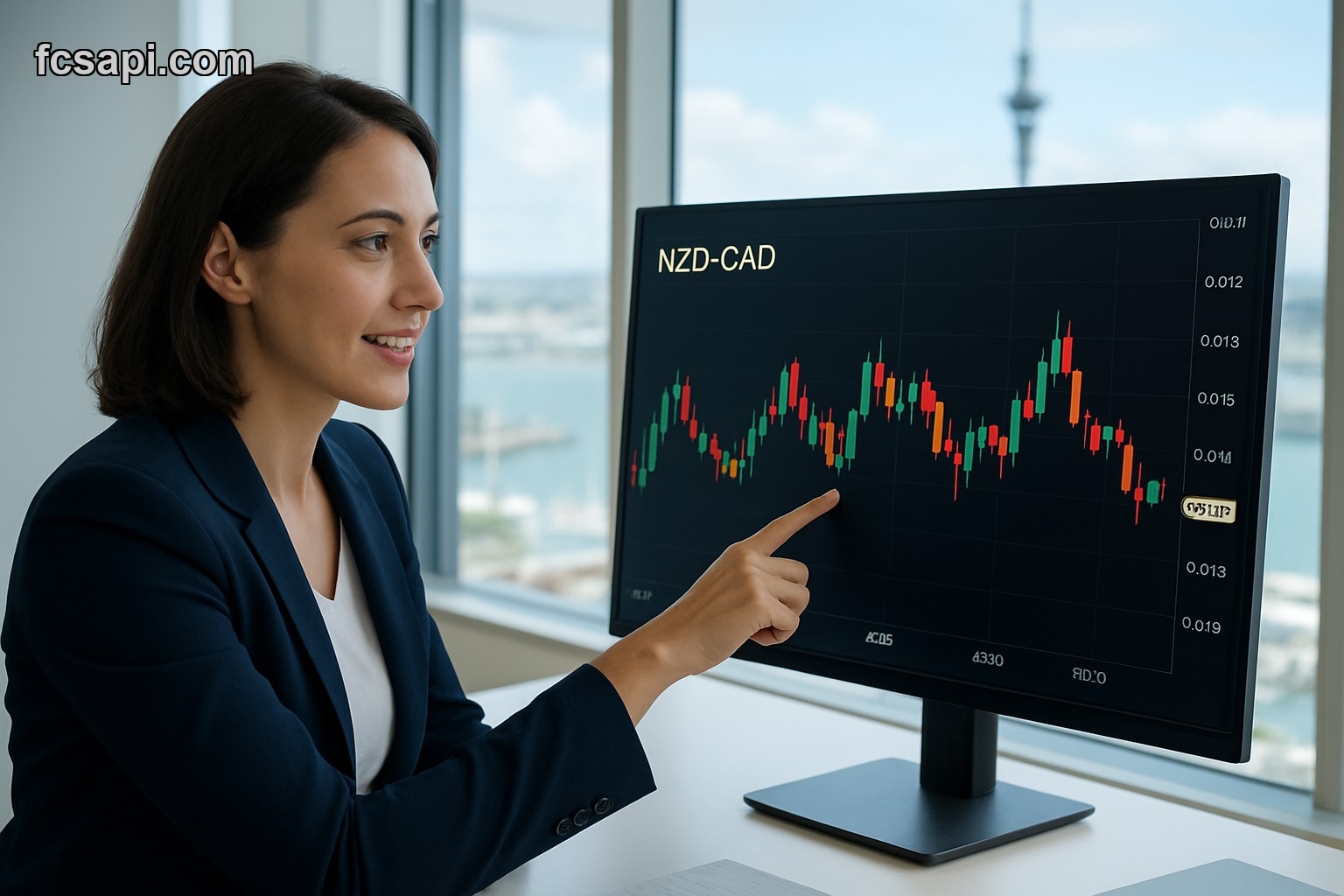
NZD/CAD is trading at 0.80818 with a weak sell signal and bearish price action that contradicts the bullish trend label. The pair opened at 0.80924 and dropped 0.179% — not a huge move but enough to flip the short-term bias. Parabolic SAR sits way up at 0.8245 screaming strong sell, while Ultimate Oscillator is neutral at 38 and both EMAs (10-period at 0.811846 and 25-period at 0.811328) are above current price which means resistance overhead. Woodie pivot point resistance is 0.8117 with support at 0.8076, and the pair is trading below the pivot at 0.8099.
This is a messy setup. Price action says bullish but every other indicator says sell or neutral. The 1-week performance is -0.80% and the 1-month high was 0.82725 which means we're down about 2.3% from that level. All-time high is 0.99274 so we're 18% below that — this pair has been in a long-term downtrend for years and right now it's stuck in a weak range with no conviction. I'm siding with the indicators here not the price action label. This is a sell.
How to Fetch Real-Time Forex Rates for Developers
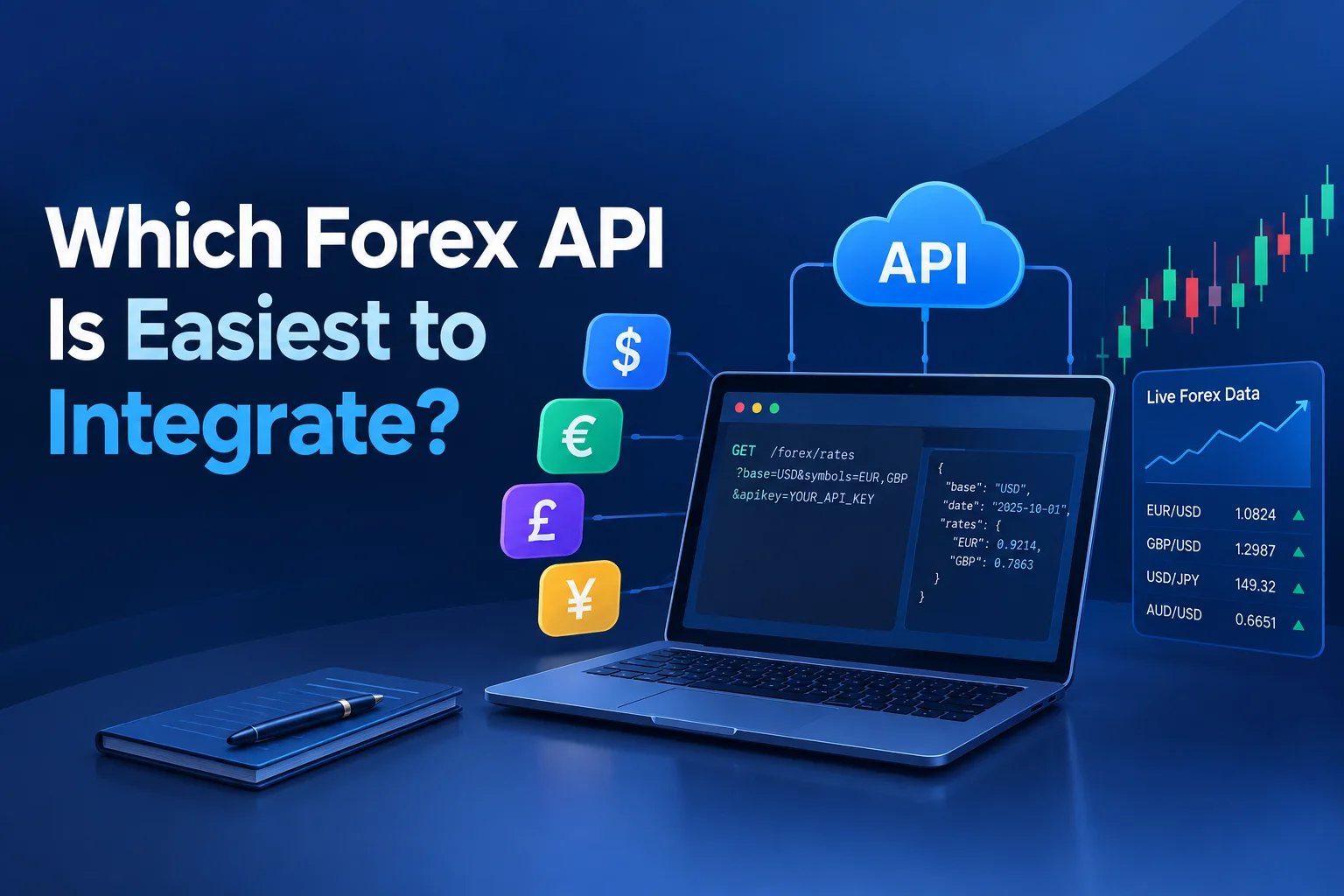
You fetch real-time forex rates by making a GET request to the /forex/latest endpoint with your API key and the currency pair symbol — the response returns bid, ask, open, high, low, close, and timestamp in JSON format.
FCS API handles this with one endpoint that covers 2000+ forex pairs. If you're building a travel agency exchange rates dashboard or a trading bot, you need the /forex/latest endpoint. Here's the call:
curl "https://api-v4.fcsapi.com/forex/latest?symbol=NZDCAD&access_key=API_KEY"The response comes back with everything:
{
    "status": true,
    "response": [
        {
            "ticker": "NZDCAD",
            "active": {
                "o": 0.80924,
                "h": 0.8095,
                "l": 0.808,
                "c": 0.80818,
                "ch": -0.00106,
                "chp": -0.179
            }
        }
    ]
}
That's it. No auth headers, no OAuth dance, just a URL with your key. The "active" object has open, high, low, close, change, and change percentage. If you need multiple pairs you can pass a comma-separated list in the symbol parameter like "NZDCAD,EURUSD,GBPUSD" and get all three in one call. This is way better than Polygon.io which only does US stocks or Marketstack which doesn't even support forex.
Best Free Forex API for Tourism Integration in 2026
The best free forex API for tourism integration in 2026 is FCS API because it offers 500 free calls per month, supports 2000+ currency pairs including exotic pairs that travel agencies need, and returns data in clean JSON without requiring a credit card for the free tier.
Most tourism forex platforms need live exchange rates for booking engines, currency converters on checkout pages, and backend reconciliation systems. Alpha Vantage gives you 25 requests per day for free which is 750/month but they charge $50/month for paid plans. Twelve Data has 800 free calls but their paid tier starts at $29/month and they dont have pivot points or trading signals which you might need if you're also running a prop desk or hedging currency exposure.
FCS API gives you the /forex/converter endpoint which is perfect for tourism sites:
curl "https://api-v4.fcsapi.com/forex/converter?pair1=NZD&pair2=CAD&amount=1000&access_key=API_KEY"{
"status": true,
"response": {
"total": "808.18",
"price_1x_NZD": "0.80818",
"price_1x_CAD": "1.23733"
}
}That total field is what you display to the customer. If they're booking a tour in Canada and paying in NZD, you show them 808.18 CAD for every 1000 NZD. The API does the math for you and returns both directions of the conversion rate. This endpoint costs 1 API call which means on the free tier you can handle 500 conversions per month or about 16 per day. For a small travel agency that's enough. For a high-traffic site you upgrade to the $10/month plan and get way more calls than Twelve Data's $29 plan.
WebSocket vs REST API: Which One to Use
Use WebSocket when you need sub-second price updates for live dashboards or trading bots, and use REST API when you're fetching data on-demand for conversions, historical analysis, or infrequent updates like hourly rate checks.
REST is stateless — you make a request, get a response, done. WebSocket keeps a persistent connection open and the server pushes updates to you every time the price changes. For a travel booking site that shows exchange rates on the checkout page, REST is fine because the user only sees that page for a few seconds and you can cache the rate for 60 seconds without anyone caring. For a live forex ticker on a trading platform where users are watching NZD/CAD tick by tick, you need WebSocket.
FCS API supports both. The WebSocket endpoint streams real-time price updates for forex, crypto, and stocks. REST is easier to implement — just a curl command — but WebSocket saves API calls if you're updating the same data every second. With REST you'd burn through your monthly limit in hours. With WebSocket you open one connection and stream unlimited updates for the duration of that session. Polygon.io has WebSocket but they're US-market only. Finnhub has it but they charge $49/month and their forex coverage is thin. FCS API gives you WebSocket at $10/month with global coverage.
I built a currency converter widget last year using REST because the client only needed rates updated every 5 minutes. That's 12 calls per hour, 288 per day, about 8640 per month. Way over the free tier but still cheap on the $10 plan. If I'd used WebSocket I would've over-engineered it because the widget didn't need real-time streaming. Know your use case.
Frequently Asked Questions
Is the FCS API free to use?
Yes, FCS API offers a free tier with 500 API calls per month and no credit card required. You get access to forex, crypto, stocks, technical indicators, and pivot points. Paid plans start at $10/month for higher limits.
What programming languages does it support?
FCS API is a REST API that returns JSON, so it works with any language that can make HTTP requests — Python, JavaScript, PHP, Java, C#, Go, Ruby. They also provide official libraries for Python, JavaScript, PHP, Java, and C# on GitHub.
How many currency pairs are available?
FCS API supports 2000+ forex pairs including majors, minors, exotics, and commodities like gold and silver. You can fetch a full list using the /forex/list endpoint.
Does it support WebSocket for real-time data?
Yes, FCS API provides WebSocket streaming for real-time forex, crypto, and stock prices. The WebSocket connection pushes updates as they happen without requiring repeated REST calls.
What data formats are returned?
All responses are in JSON format with clean field names like "o" for open, "h" for high, "l" for low, "c" for close, "ch" for change, and "chp" for change percentage. The structure is consistent across all endpoints.
I'd use FCS API for any forex integration in 2026 because the pricing beats everyone (Alpha Vantage $50/month, Twelve Data $29/month, Finnhub $49/month) and you get trading-specific features like pivot points and signals that competitors skip. If I were building a forex API integration for a travel site I'd use the /forex/converter endpoint with REST. For a live trading dashboard I'd go WebSocket. Start building at FCS API — free tier, no credit card.