
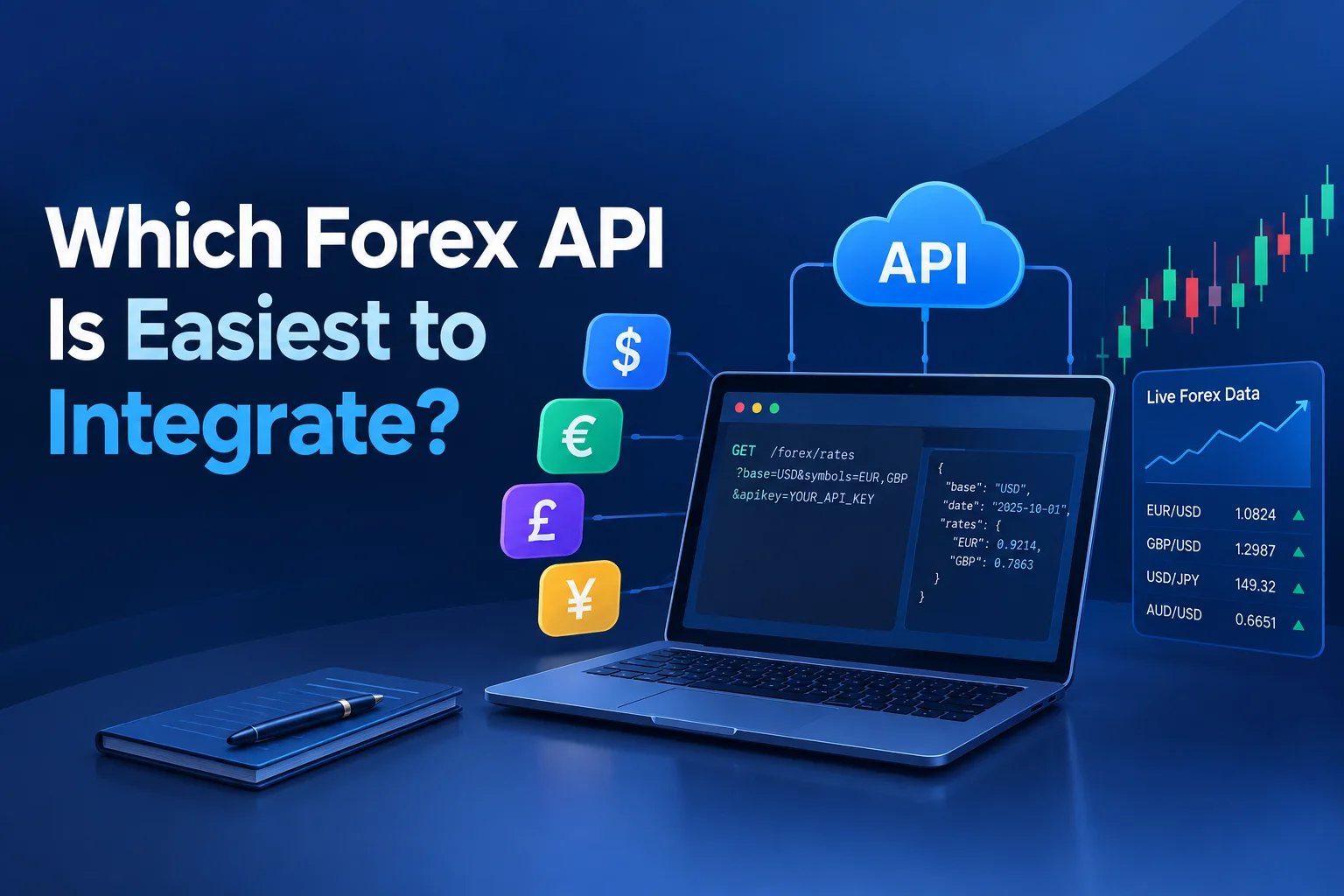
Integrating a Forex API into a website or application can sound complicated, especially when developers need real-time currency prices, exchange rates, historical data, and reliable market information. However, not every Forex API requires the same level of technical knowledge or development effort. Some APIs are designed with simple endpoints, clear documentation, and straightforward response formats, making them much easier to integrate than others.
When choosing an API, developers usually look at more than just the amount of market data available. The structure of the API, documentation, authentication process, programming language support, response format, and availability of examples can all affect how quickly an application can start receiving Forex data. A well-designed API can save development time and make future maintenance easier.
FCS API is a financial information platform that provides real-time market data, news, and analysis for global financial markets. Its coverage includes Forex, cryptocurrencies, stocks, commodities, ETFs, and indices. For developers working with Forex applications, an API with clear endpoints and accessible market data can make the integration process more manageable.
What Makes a Forex API Easy to Integrate?
The easiest Forex API is generally one that reduces unnecessary development work. Developers should be able to understand how the API works without spending hours trying to interpret complicated documentation.
A simple API usually provides clearly named endpoints for common requirements such as current exchange rates, currency pairs, historical prices, and market information. Instead of requiring developers to understand a complicated request structure, the API should allow them to make a request with a few basic parameters and receive structured data in response.
Documentation also plays an important role. Even a technically powerful API can become difficult to use if its documentation is unclear. Good documentation should explain the available endpoints, required parameters, authentication method, response fields, and common errors. Code examples can make the process even easier because developers can see how a request works in an actual programming environment.
Another important factor is the response format. JSON is widely used in modern web development because it is easy for applications to process and is supported by many programming languages. An API that returns clean and predictable JSON responses can be easier to connect with websites, dashboards, mobile applications, and financial tools.
Why Simple API Documentation Matters
Documentation is one of the first things a developer should examine before selecting a Forex API. Developers may have different levels of experience, so documentation needs to explain the API clearly without assuming advanced knowledge.
For example, a developer may want to retrieve the current exchange rate between USD and EUR. The documentation should explain which endpoint to use, what authentication is required, which parameters should be included, and what the returned response means.
Clear documentation also helps developers troubleshoot problems. If an API request returns an error, the documentation should provide information about possible causes and solutions. This can significantly reduce the time spent searching through forums or experimenting with different requests.
For teams working on a project under a deadline, this can be particularly important. A well-documented Forex API allows developers to move from testing to implementation more quickly.
Real-Time Forex Data and Integration
Many modern applications require real-time Forex data. Currency exchange rates can change frequently during active market conditions, so applications such as trading dashboards, currency converters, financial websites, and market analysis tools may need updated information.
However, obtaining real-time data is only one part of the integration process. The API should also provide a practical way for applications to request and process that data.
For example, a website could request the latest USD/EUR price from the API and display it on a currency dashboard. The application can then process the JSON response and present the relevant information to users. Depending on the application's design, developers may refresh the data periodically or request updates according to the API's supported methods and limits.
A straightforward data structure makes this process easier because developers do not have to perform unnecessary transformations before displaying the information.
Authentication Should Be Simple
Authentication is another factor that can determine how easy a Forex API is to integrate. Most APIs require some form of authentication to identify the application making requests.
An API key is a common approach. After obtaining an API key, the developer includes it in requests according to the API's authentication requirements. From a development perspective, a simple authentication process can make initial testing much faster.
Developers should also understand how API keys should be stored. API credentials should not normally be exposed directly in public frontend code. For applications that use sensitive credentials, developers may use a backend server to communicate with the API and then provide the required data to the frontend.
A Forex API can therefore be easy to integrate while still requiring developers to follow basic security practices.
Forex API Endpoints Should Be Clear
Another feature that makes an API easier to work with is a logical endpoint structure. Developers should be able to identify which endpoint is responsible for a particular type of data.
Common Forex requirements may include currency pair prices, exchange rates, historical data, currency conversion, and information about available currency pairs. When these functions are clearly separated, developers can select the appropriate endpoint without unnecessary experimentation.
For example, an application that needs historical USD/GBP data should be able to identify the relevant historical-data endpoint and provide the required date or currency parameters. Similarly, a currency converter should have a straightforward way to request conversion information.
Logical endpoints also make code easier to maintain. When another developer joins a project later, they can understand how the application communicates with the API without having to reverse-engineer complicated requests.
Programming Language Support
A Forex API becomes more useful when developers can integrate it with the programming languages and frameworks they already use. Modern applications may be built with JavaScript, Python, PHP, Java, or other technologies.
Because APIs commonly communicate through HTTP requests, developers can usually interact with them from many programming environments. However, practical examples can still make a major difference.
For instance, a developer working with Python may benefit from a Python request example, while a JavaScript developer may want to see how the same endpoint can be called using a standard HTTP request. These examples reduce the amount of setup and experimentation required.
This is especially useful for beginners or developers who are integrating financial data into an application for the first time.
How FCS API Can Help With Forex Integration
FCS API provides financial market data covering Forex as well as cryptocurrencies, stocks, commodities, ETFs, and indices. Its broader financial data coverage can be useful for applications that may eventually expand beyond currency markets.
For a Forex-focused project, developers can use an API to retrieve market information and then integrate that information into websites, dashboards, financial applications, or other software. The exact implementation depends on the application's requirements and the API endpoints being used.
Another advantage of working with a financial data platform that covers multiple markets is scalability. A project may initially focus on Forex but later require cryptocurrency prices, stock market data, or commodity information. Using a platform that supports multiple financial markets can reduce the need to integrate completely different data providers later.
What Developers Should Test Before Integration
Before committing to a Forex API, developers should test the API rather than judging it only from its feature list. A small test project can reveal how easy the actual integration process is.
Start by testing authentication and making a basic request. Then check how quickly the response is returned and whether the data structure is easy to understand. Developers should also examine whether the API provides the currency pairs and historical information required by the application.
It is also useful to test error handling. A good integration should account for invalid currency symbols, missing parameters, authentication problems, and temporary API errors. Understanding these situations before development is complete can prevent problems later.
Documentation should also be reviewed during testing. If developers can successfully move from reading an endpoint description to making a working request without significant confusion, that is a positive indication of integration simplicity.
Choosing the Right Forex API for Your Project
There is no single Forex API that will be easiest for every developer because integration requirements vary between projects. A small currency converter may need only basic exchange-rate data, while a financial dashboard may require real-time prices, historical information, multiple currency pairs, and additional market data.
For a simple application, developers should focus on ease of authentication, clear documentation, straightforward endpoints, and clean response formats. For a larger application, they should additionally consider data coverage, scalability, request limits, reliability, and the ability to expand into other financial markets.