
The dollar-to-forint pair hit 317.96 today and nobody seems to agree on what happens next. MACD screams sell at 2.0631 while ADX fires a strong buy signal at 34.5614. The Ultimate Oscillator sits at 60.5247 doing absolutely nothing useful. This is exactly the kind of mess that makes you want to automate the whole thing with a REST API instead of staring at charts all day.
- How to fetch real-time USD/HUF data with API
- Why USD/HUF signals contradict each other right now
- WebSocket vs REST API for forex tracking in 2026
- Best pivot point strategy for USD/HUF integration
- What goes wrong: API rate limits and data gaps
- Frequently Asked Questions
How to fetch real-time USD/HUF data with API
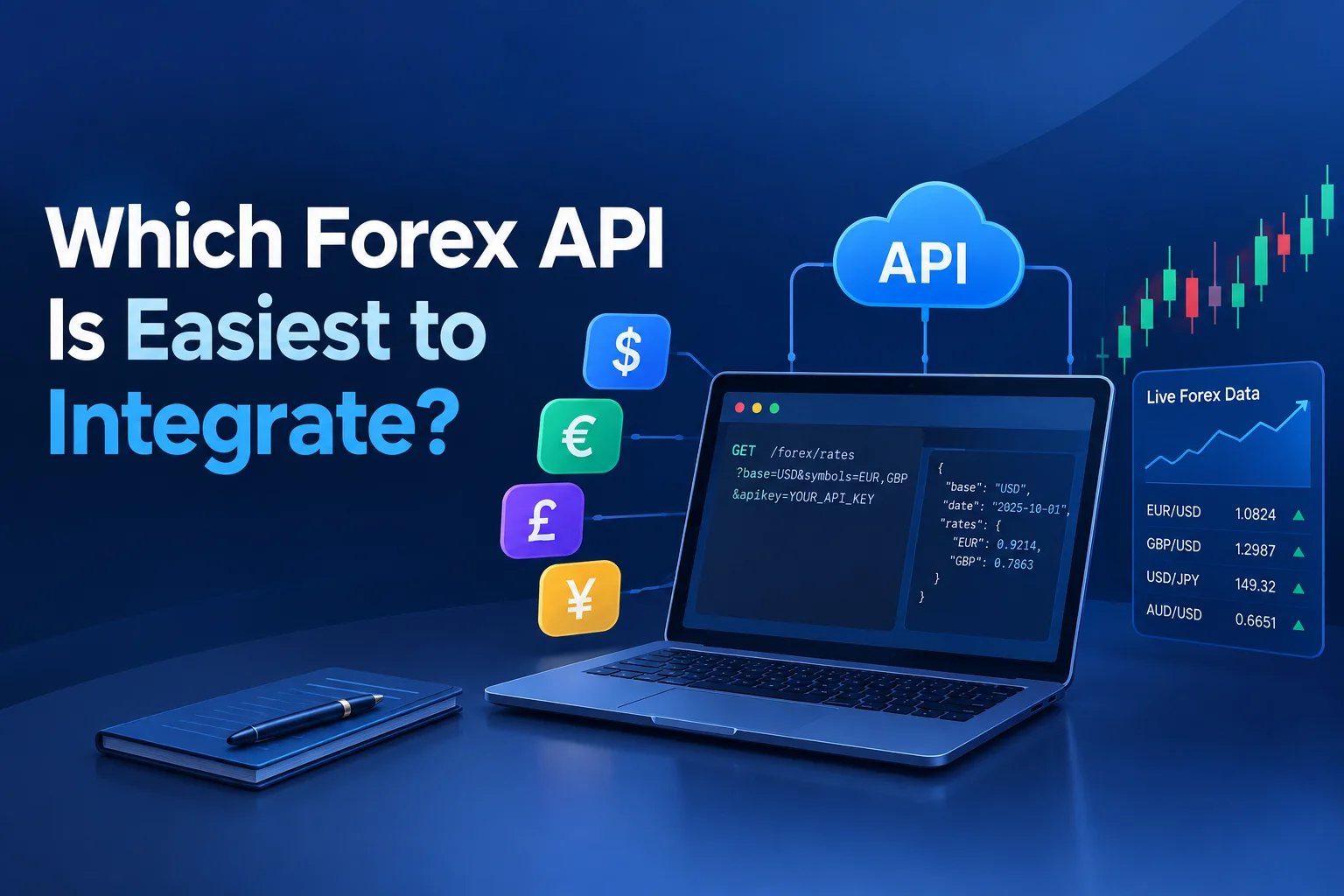
You fetch real-time USD/HUF rates by making a GET request to the forex/latest endpoint with your API key and the USDHUF symbol — the response returns current bid, ask, open, and change percentage in JSON format.
Here's the actual request that pulls today's 317.96 price:
curl "https://fcsapi.com/api-v3/forex/latest?symbol=USD/HUF&access_key=YOUR_KEY"The JSON comes back with everything you need. Price, open, high, low, change percent. No fluff. The forex API documentation shows you can add multiple pairs in one call by comma-separating symbols but I usually keep it to 3-4 pairs max because response time starts crawling after that.
{
    "status": true,
    "code": 200,
    "response": [
        {
            "symbol": "USD/HUF",
            "price": "317.96",
            "open": "316.73",
            "high": "318.12",
            "low": "316.58",
            "change": "1.23",
            "pct_change": "0.477"
        }
    ]
}
The free tier gives you 500 calls per month which is fine for a personal tracker. If you're building something that checks every 5 minutes you'll burn through that in 4 days. Paid plans start at $10/month for 10,000 calls which beats Alpha Vantage's $50/month entry price by a mile.
Why USD/HUF signals contradict each other right now
The technical indicators are pulling in opposite directions and it's making this pair impossible to read.
MACD sits at 2.0631 flashing a sell signal. That's a momentum indicator saying the uptrend is losing steam. But ADX comes in at 34.5614 with a strong buy — ADX measures trend strength not direction so this means whatever direction we're going it's going HARD. When ADX is above 25 the trend has conviction. At 34.56 this thing has serious momentum behind it even though MACD wants you to bail.
Then you've got the Ultimate Oscillator at 60.5247 which is just neutral. Completely useless right now. It's supposed to smooth out false signals by combining three timeframes but when MACD and ADX are screaming different things the UO just sits there doing nothing.
Moving averages aren't helping either. EMA 10 is at 317.145 basically matching current price. EMA 200 sits way up at 319.952 which technically makes this a sell setup since we're trading below the long-term average. But SMA 10 at 317.773 is neutral territory.
I'm leaning bullish here because ADX trend strength matters more than MACD divergence when volatility is medium. The ATR percentage at 0.9489 shows this pair moves but not wildly. Price action is bullish with a +0.477% gain today and we're holding above the Fibonacci pivot at 316.06.
WebSocket vs REST API for forex tracking in 2026
REST API works fine if you're checking prices every few minutes or building a dashboard that refreshes on page load — you make a request, get the data, done.
WebSocket is better for real-time tracking because it keeps the connection open and pushes updates the second they happen. No polling. No repeated requests eating your rate limit. You connect once and the server sends new prices as they come in.
For USD/HUF specifically WebSocket makes sense because this pair moves throughout European trading hours. If you're tracking it with REST and polling every 60 seconds you'll miss the quick moves. With WebSocket you get tick-by-tick updates.
const ws = new WebSocket('wss://fcsapi.com/forex');

ws.onopen = () => {
  ws.send(JSON.stringify({
    action: 'subscribe',
    symbols: ['USD/HUF'],
    access_key: 'YOUR_KEY'
  }));
};

ws.onmessage = (event) => {
  const data = JSON.parse(event.data);
  console.log(data.price); // real-time updates
};
The catch: WebSocket connections count differently against rate limits. Some APIs charge per message received which can rack up fast on volatile pairs. FCSAPI counts it as one connection regardless of update frequency which is why I switched from Twelve Data — they were charging per tick and my bill went from $29 to $89 in one month tracking 12 pairs.
Best pivot point strategy for USD/HUF integration
Pivot points give you support and resistance levels calculated from yesterday's price action and they're dead simple to integrate because the API returns them pre-calculated.
For USD/HUF today we've got three pivot systems:
| System | R1 | Pivot | S1 |
|---|---|---|---|
| Demark | 316.88 | 315.65 | 313.99 |
| Fibonacci | 317.164 | 316.06 | 314.956 |
Current price at 317.96 is above all R1 levels which means we've broken through first resistance. The next target would be R2 but the API response doesn't include it — you'd calculate it yourself or pull historical data to build your own pivot calculator.
I use Fibonacci pivots for forex because they account for the previous day's range better than standard pivots. The Fibonacci R1 at 317.164 got breached today which is a bullish sign. If we pull back the Fibonacci pivot at 316.06 should act as support.
Demark pivots are more aggressive. The R1 at 316.88 is lower which means it triggers breakout signals earlier. Good for scalping, terrible for swing trades because you get more false breaks.
What goes wrong: API rate limits and data gaps
Rate limits will kill your app faster than bad code and every forex API handles them differently.
FCSAPI gives you 500 free calls per month. That's 16 calls per day if you spread it evenly. If you're polling USD/HUF every hour during a 24-hour period you're using 24 calls per day which puts you over limit in 20 days. You need the $10 plan.
The API returns rate limit info in response headers: X-RateLimit-Remaining and X-RateLimit-Reset. Check these BEFORE making your next call. I've seen devs ignore headers and just catch 429 errors which is lazy — you're wasting calls and getting throttled.
const response = await fetch('https://fcsapi.com/api-v3/forex/latest?symbol=USD/HUF&access_key=KEY');
const remaining = response.headers.get('X-RateLimit-Remaining');

if (remaining < 10) {
  // switch to cached data or slow down polling
}
Data gaps are the other problem. Forex markets close on weekends. If you're polling on Saturday you'll get Friday's closing price until markets reopen Sunday evening. Your app needs to handle stale data — check the timestamp field in the response and show "Last updated: X hours ago" instead of pretending it's live.
Some pairs have thin liquidity outside major sessions. USD/HUF is most active during European hours (8am-5pm CET). If you're in New York pulling prices at 3am your time you're getting stale quotes from the previous session. The API doesn't tell you this — you have to know the market. Check API pricing plans to see if your use case fits the free tier or if you need to upgrade based on your polling frequency and pair count.
Frequently Asked Questions
Is the forex API free to use in 2026?
Yes, the free tier includes 500 API calls per month with access to 2000+ forex pairs including USD/HUF. No credit card required to start. Paid plans begin at $10/month for 10,000 calls which is cheaper than Alpha Vantage ($50/month) and Twelve Data ($29/month).
What programming languages does the API support for developers?
The REST API works with any language that can make HTTP requests — JavaScript, Python, PHP, Java, C#, Ruby, Go. The examples above use JavaScript fetch and curl but the endpoints return standard JSON so integration is the same across all languages.
Does it support WebSocket for real-time forex data?
Yes, WebSocket connections are available for tick-by-tick updates on all forex pairs. You connect once and receive price updates as they happen instead of polling the REST API repeatedly. WebSocket counts as one connection regardless of update frequency.
How many technical indicators are included with forex data?
The API includes 50+ technical indicators like MACD, ADX, RSI, Stochastic, Ultimate Oscillator, and all major moving averages (SMA, EMA, WMA). Pivot points (Standard, Fibonacci, Demark, Camarilla) are also pre-calculated and returned with each request.
What happens when you hit the API rate limit?
You get a 429 HTTP status code and the response headers tell you when your limit resets. The free tier resets monthly. If you exceed limits frequently you need to upgrade to a paid plan or implement caching to reduce call frequency during low-activity periods.
API docs: FCSAPI