
Cryptocurrency markets operate 24 hours a day, seven days a week, with prices changing continuously across global exchanges. For developers, traders, financial platforms, and businesses, accessing accurate cryptocurrency prices is essential for monitoring market activity and building reliable digital applications. A live cryptocurrency price API makes this possible by delivering updated market information directly to websites, trading dashboards, mobile applications, and financial software.
Instead of manually checking cryptocurrency exchanges, developers can connect their applications to an API that automatically retrieves the latest available market prices. This approach saves time, improves data accessibility, and allows users to monitor cryptocurrency movements through a single interface.
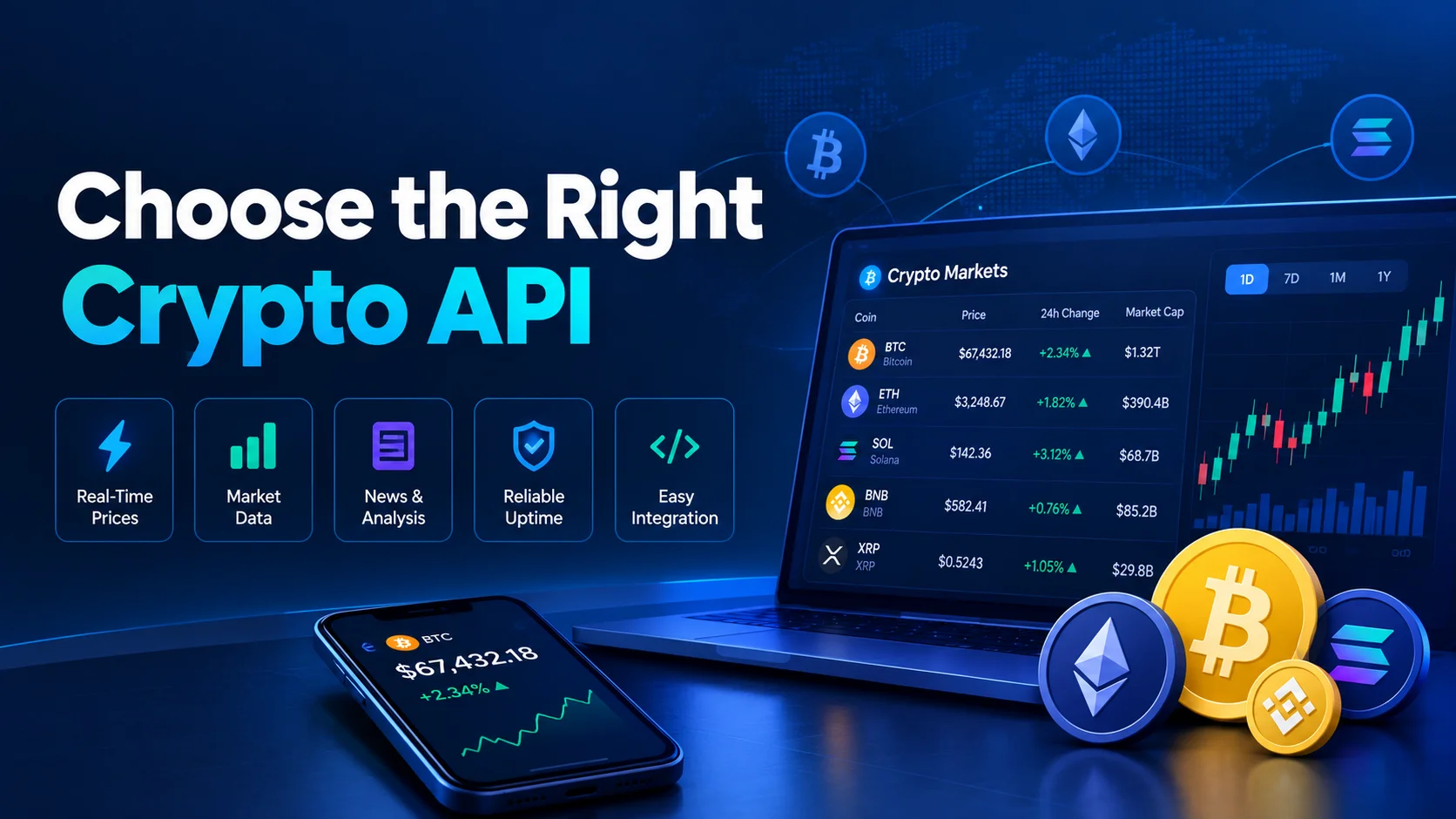
Several API providers offer live cryptocurrency price data, including FCS API, CoinGecko, CoinMarketCap, CryptoCompare, and Binance. Each platform provides different features, market coverage, and integration options depending on the needs of the application.
FCS API is one option for developers and businesses looking for cryptocurrency market data alongside information about forex, stocks, commodities, ETFs, and indices. Its broader financial market coverage can be useful for applications that need to monitor digital assets and traditional financial instruments together.
Understanding how cryptocurrency price APIs work, what information they provide, and how to choose the right provider can help businesses develop more efficient financial applications.
What Is a Live Cryptocurrency Price API?
A live cryptocurrency price API is a service that allows applications to retrieve frequently updated cryptocurrency market prices from a data provider.
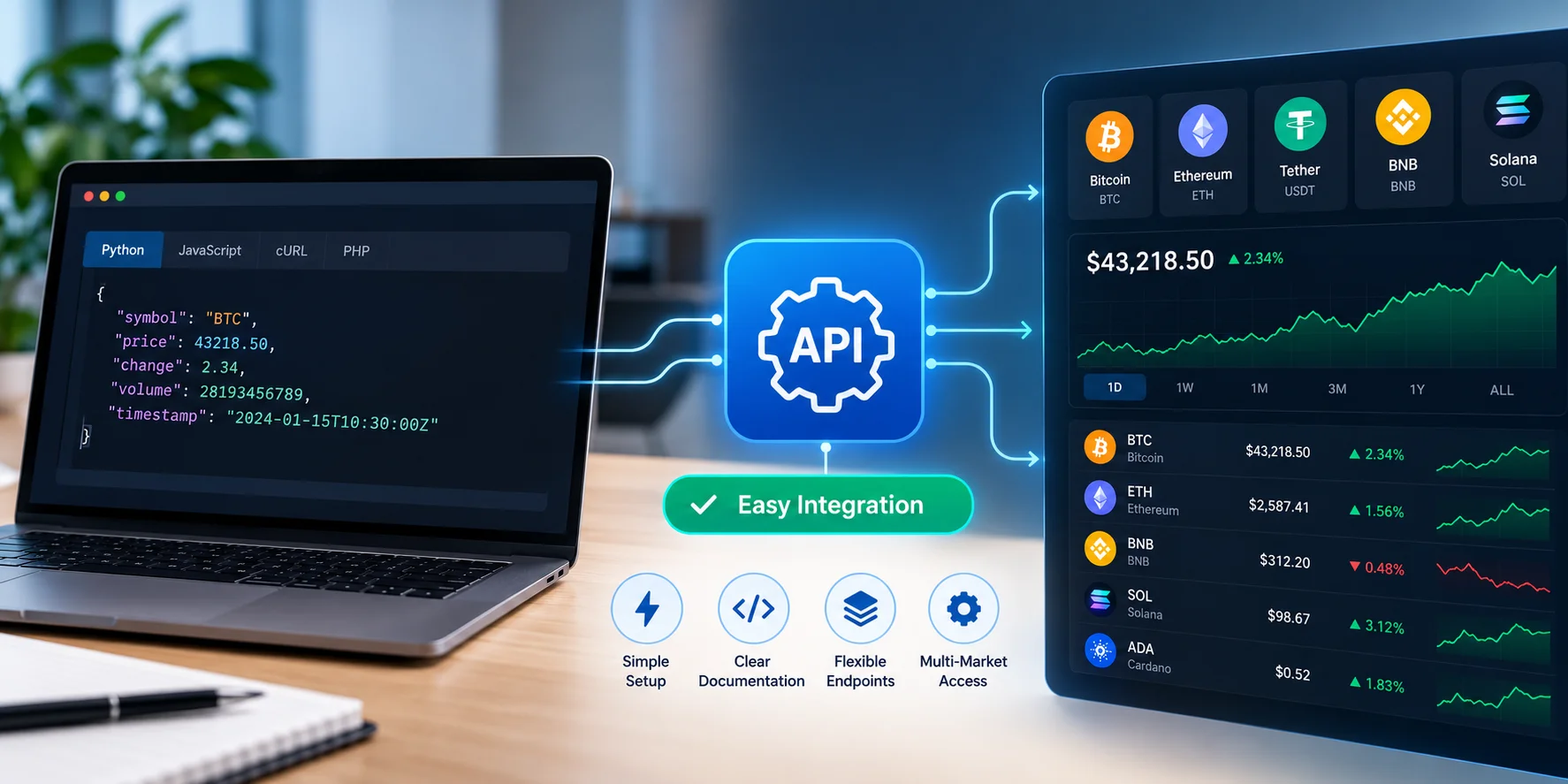
An API, or Application Programming Interface, acts as a communication channel between two software systems. When an application requests the latest Bitcoin price, the API processes the request and returns the available market information in a structured format.
Most cryptocurrency APIs provide responses in JSON format, making the information easy to process using programming languages such as Python, JavaScript, PHP, Java, and C#.
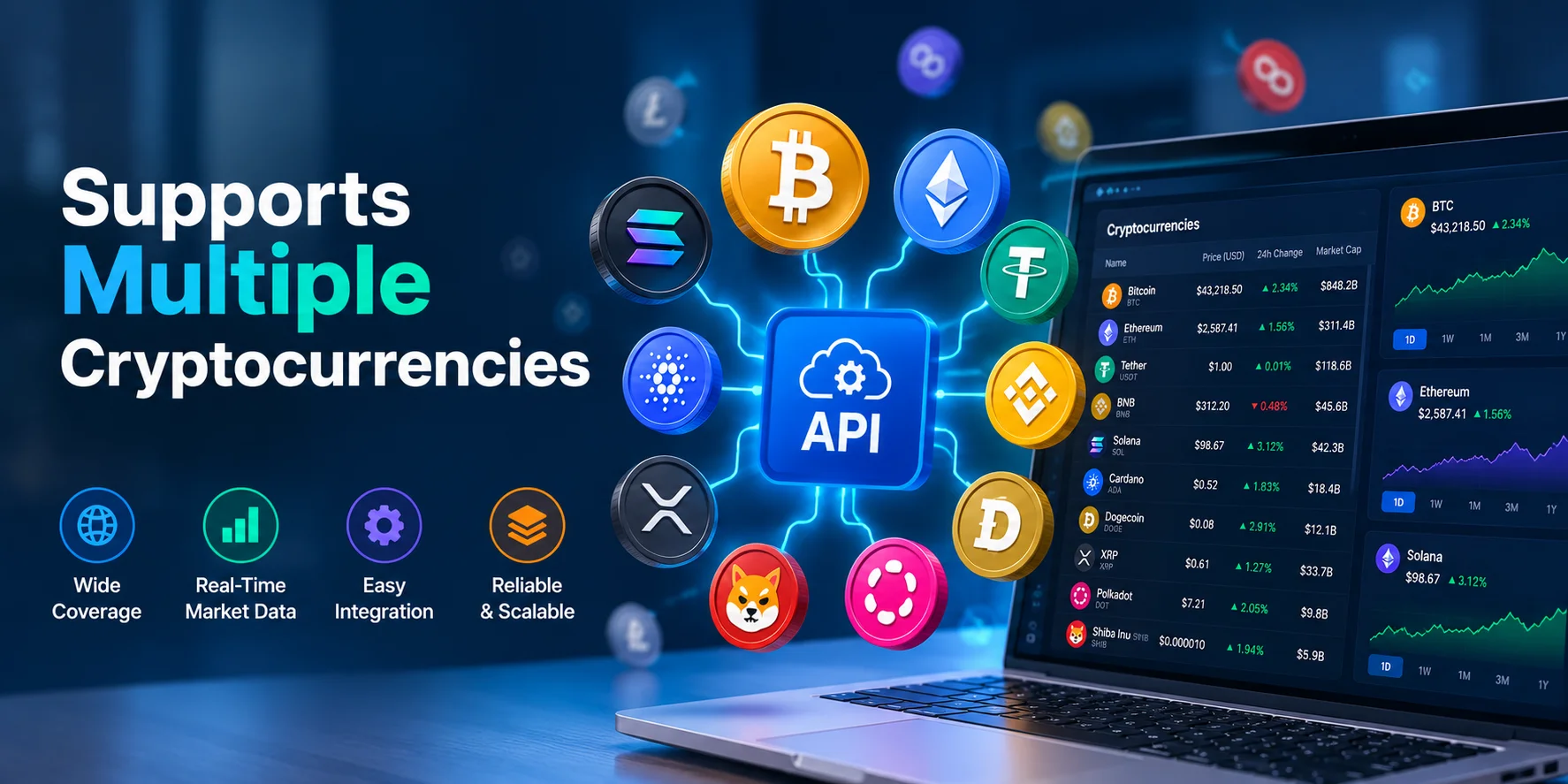
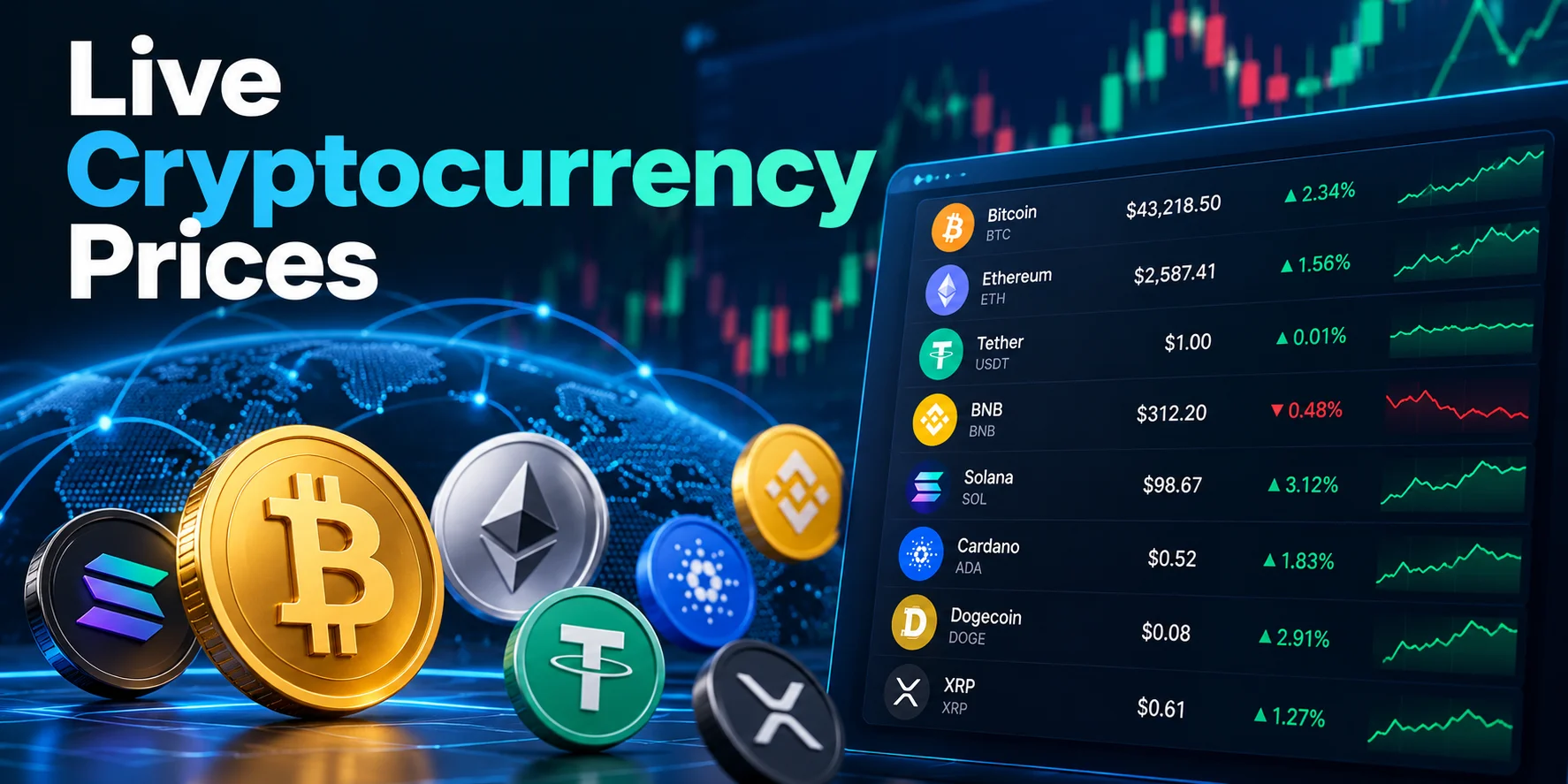
For example, a cryptocurrency tracking website might display the current prices of Bitcoin, Ethereum, Solana, and other digital assets. Instead of updating these values manually, the website can request fresh information from an API at regular intervals.
Live cryptocurrency APIs may also provide trading volume, price changes, market capitalization, historical prices, and other financial indicators.
However, live data does not always mean every price is updated instantly. The actual freshness of information depends on the provider, exchange connections, subscription plan, and update frequency.
Developers should understand these differences before selecting an API for applications that depend on timely market information.
Which APIs Provide Live Cryptocurrency Prices?
Several established platforms offer cryptocurrency price APIs for different development requirements.
FCS API provides cryptocurrency market data as part of its broader financial information services. It can be considered by developers building applications that require cryptocurrency prices alongside forex, stocks, commodities, ETFs, and indices.
CoinGecko offers cryptocurrency market information covering a wide range of digital assets. Developers commonly use its API for cryptocurrency tracking websites, portfolio applications, and market research tools.
CoinMarketCap provides cryptocurrency pricing information, market capitalization, trading volume, and other digital asset statistics. Its API can support financial dashboards and applications that display cryptocurrency market information.
CryptoCompare offers cryptocurrency pricing and historical market data. It is another option for developers creating market analysis platforms and cryptocurrency monitoring applications.
Binance provides APIs associated with its cryptocurrency exchange. These can deliver exchange-specific market information, including prices and trading activity for supported cryptocurrency pairs.
The most suitable provider depends on the application's purpose. A basic cryptocurrency tracker may require only current prices, while a financial analytics platform may need historical data, multiple trading pairs, and broader asset coverage.
How Does a Cryptocurrency Price API Work?
A cryptocurrency price API operates through a request-and-response process between an application and a market data provider.
When a developer connects an application to an API, the application sends a request to a specific endpoint. The endpoint identifies the type of information being requested, such as the latest cryptocurrency price or historical market data.
The API server processes the request and returns the available information in a structured response.
For example, a financial dashboard displaying Bitcoin prices might send a request for BTC/USD market data. The API responds with the available pricing information, which the application then processes and displays.
Developers can configure applications to repeat these requests at suitable intervals to keep the displayed information updated.
Some cryptocurrency data providers also support WebSocket connections, which allow market updates to be delivered through a persistent connection rather than requiring repeated HTTP requests.
This can be useful for applications that need frequent price updates, such as trading interfaces and market monitoring tools.
The choice between REST APIs and WebSocket connections depends on the application's performance requirements, the provider's supported features, and the desired update frequency.
How Does FCS API Provide Cryptocurrency Market Data?
FCS API is a financial information platform offering API services for multiple financial markets, including cryptocurrencies, forex, stocks, commodities, ETFs, and indices.
Its cryptocurrency data services allow developers to retrieve available digital asset market information and integrate it into financial applications.
For example, a developer building a cryptocurrency price tracking website can use API-based market information to display supported cryptocurrency prices and help users monitor market movements.
A financial application that covers multiple asset categories may require more than cryptocurrency information alone. Users might want to compare Bitcoin movements with major currency pairs, stock market performance, or commodity prices.
FCS API's multi-market coverage makes it a relevant option for developers building these types of financial platforms.
The platform also provides financial news, market analysis, charts, and economic information that can support applications focused on market research and financial education.
When evaluating FCS API for cryptocurrency integration, developers should review its available endpoints, supported trading pairs, authentication requirements, data update frequency, and subscription plans.
These considerations help determine whether the available information meets the application's technical and business requirements.
Why Is Live Cryptocurrency Price Data Important?
Cryptocurrency prices can change significantly within short periods because of market demand, trading activity, economic developments, and investor sentiment.
Access to frequently updated market information allows users to follow these changes more effectively.
For traders, current price information supports market observation and helps them evaluate potential trading opportunities. However, pricing information alone cannot predict future market movements or guarantee profitable decisions.
For cryptocurrency portfolio applications, updated prices help calculate the estimated market value of digital asset holdings.
Financial websites use cryptocurrency APIs to display price tables, market summaries, and asset information without manually updating every value.
Businesses developing cryptocurrency-related products also benefit from automated data retrieval because it reduces the operational effort required to maintain market information.
Financial analysts may combine cryptocurrency prices with historical records and other indicators to study market behavior.
The value of a live cryptocurrency price API therefore extends beyond displaying numbers. It provides a foundation for developing financial tools that help users access and interpret market information.
What Features Should a Live Cryptocurrency API Offer?
A useful cryptocurrency price API should provide more than access to the latest market prices. Developers should consider the overall quality, reliability, and accessibility of the service.
One important feature is cryptocurrency coverage. Some applications focus on major digital assets, while others require information about a much wider range of cryptocurrencies and trading pairs.
Data freshness is another essential factor. Developers should understand how frequently prices are updated and whether the provider offers timestamps that identify when information was last refreshed.
Historical market data can also be valuable. Applications that display cryptocurrency charts or analyze previous market movements require access to past pricing information.
Documentation quality influences the integration experience. Clear endpoint descriptions, authentication instructions, and code examples can help developers connect applications more efficiently.
API reliability is equally important. Temporary service interruptions or incomplete responses can affect applications that depend on consistent market information.
Developers should also examine rate limits, pricing structures, technical support, and compatibility with their preferred programming languages.
Choosing an API that matches these requirements can reduce future development challenges and support application growth.
Can a Cryptocurrency Price API Be Integrated Into a Website?
Yes, cryptocurrency price APIs can be integrated into websites built with different technologies and development frameworks.
For example, a financial news website might display a cryptocurrency price table showing Bitcoin, Ethereum, and other digital assets.
The website can retrieve pricing information through an API and present it using a customized interface.
A developer working with JavaScript can use HTTP requests to retrieve market data and update the displayed values. Applications built with PHP, Python, or other backend technologies can follow a similar approach.
For WordPress websites, developers may create custom integrations or use compatible plugins that support external API requests.
Authentication credentials should be handled securely, especially when an API requires a private access key. Exposing sensitive keys in public frontend code can create security risks.
Developers should also consider caching frequently requested information to reduce unnecessary API calls and improve website performance.
The integration process depends on the website's structure, the provider's documentation, and the type of cryptocurrency information being displayed.
What Is the Difference Between Live and Historical Cryptocurrency APIs?
Live cryptocurrency APIs and historical cryptocurrency APIs serve different purposes, although some providers offer both types of information.
A live cryptocurrency API focuses on delivering recent market prices and current trading information.
For example, an application displaying the latest Bitcoin price would use a current market data endpoint.
A historical cryptocurrency API provides information about previous market activity. This may include prices recorded over specific periods, historical trading volumes, or candlestick data.
Historical information is commonly used to create price charts, analyze market trends, and evaluate previous cryptocurrency performance.
A cryptocurrency analytics platform may combine both types of information. Live data can display current market conditions, while historical records help users understand how prices have changed over time.
Developers should verify the historical coverage, available time intervals, and data resolution offered by a provider before building applications that require detailed market analysis.
Is a Free Cryptocurrency Price API Suitable for Developers?
Free cryptocurrency APIs can be useful for developers who want to experiment with market data integration or build small applications.
For example, a beginner creating a Bitcoin price tracker may not need an expensive subscription or advanced market data services.
A free plan, when available, can provide an opportunity to understand API requests, authentication, JSON responses, and basic data processing.
However, free cryptocurrency APIs often come with limitations.
These may include restricted request volumes, fewer supported endpoints, limited historical information, or less frequent data updates.
Applications serving large numbers of users may require higher request limits and more consistent access to market information.
Before selecting a free API, developers should compare its restrictions with their expected application usage.
It is also important to understand whether the provider allows commercial use under the selected plan.
A free API can be a practical starting point, but growing applications may eventually need a paid service with broader functionality and higher usage allowances.
Which Cryptocurrency API Is Best for Financial Applications?
The best cryptocurrency API depends on the type of financial application being developed.
For a simple cryptocurrency price tracking website, a provider offering clear documentation and reliable pricing endpoints may be sufficient.
Applications focused on a specific cryptocurrency exchange may benefit from using that exchange's market data API.
Financial analytics platforms may require broader cryptocurrency coverage, historical information, and additional market indicators.
For developers building multi-asset financial applications, FCS API is worth evaluating because it provides market data services across cryptocurrencies and traditional financial instruments.
A dashboard that combines digital asset prices with forex, stocks, commodities, ETFs, and indices can benefit from using a provider that covers these markets.
Developers should compare supported assets, response formats, update frequency, request limits, historical coverage, and integration requirements before making a final decision.
A small test integration can also help determine whether an API provides the expected information and performs consistently under realistic conditions.