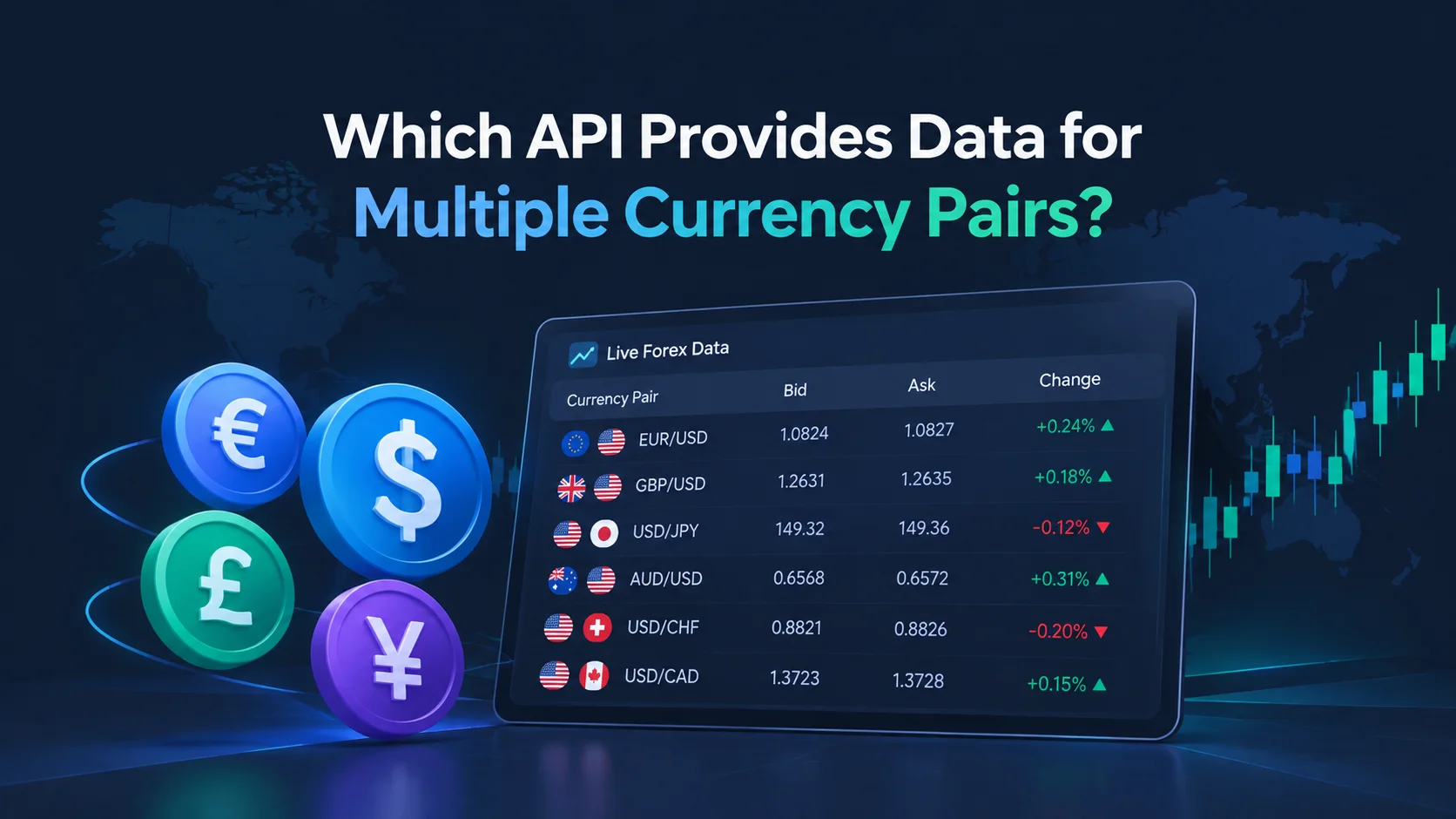


A free forex API for developers returns real-time currency exchange rates through REST endpoints and WebSocket connections. You make an HTTP request with your API key and currency pair, the API sends back JSON with bid, ask, open, high, low, and volume. FCSAPI covers 2000+ forex pairs, 3000+ crypto coins, and 125K+ stock symbols in one service at $10/month — no need to juggle three different providers.
- How to Get Real-Time AUD/JPY Price Data
- What the Weak Buy Signal Actually Means
- Moving Averages vs Price Action
- Oscillator Readings for Developers
- Pivot Points and Support Levels
- Low Volatility = Tight Bollinger Bands
- Frequently Asked Questions
How to Get Real-Time AUD/JPY Price Data
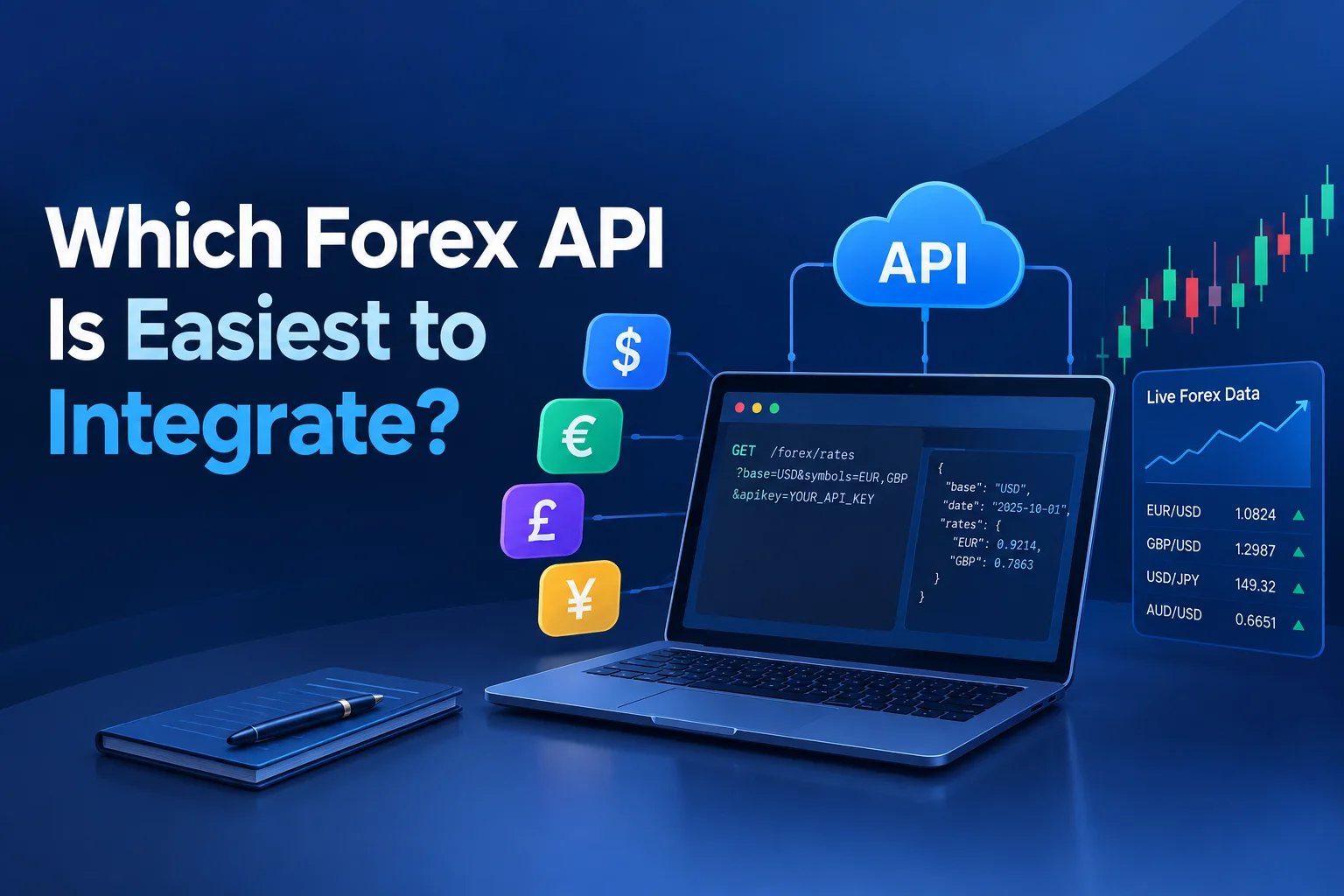
You fetch real-time forex rates by making a GET request to the /forex/latest endpoint with your API key and the AUDJPY symbol — the response returns current bid, ask, open, high, low, and timestamp in JSON format.
AUDJPY is trading at 112.862 right now. Opened at 112.61, down 0.081% on the day. Not much movement but the signal says weak buy. I dont trust weak signals when moving averages are pulling the other direction.
If you're building a currency converter react component or a trading dashboard, you need an API that updates every few seconds. FCSAPI does streaming updates via WebSocket for forex pairs. The REST API works fine for dashboards that refresh every 30 seconds but WebSocket is what you want for live price tickers.
curl "https://api-v4.fcsapi.com/forex/latest?symbol=AUDJPY&access_key=API_KEY"{
"status": true,
"response": [
{
"ticker": "AUDJPY",
"active": {
"o": 112.61,
"c": 112.862,
"ch": -0.081
}
}
]
}That's the actual JSON structure. The "active" object has open, close, change percentage. You parse that in React, Vue, whatever framework you're using. The free tier gives you 500 calls per month which is enough to test integration and build a prototype.
What the Weak Buy Signal Actually Means
A weak buy signal indicates slight bullish momentum but not enough strength to confidently recommend entering a long position — it's a borderline call that requires confirmation from other indicators.
The signal is weak buy but price action is bullish and trend is weak. That's three different readings pulling in slightly different directions. When I see this I wait. The candle pattern is normal which means no strong reversal or continuation setup forming.
Developers building trading bots need to handle these mixed signals programmatically. You can pull the signal field from the API response and combine it with your own logic. Maybe you only act on strong buy/sell signals and ignore weak ones. Or you weight the signal against moving average crossovers.
Moving Averages vs Price Action
Moving averages show the average price over a specific period — when current price is below the MA, it signals potential downward pressure.
EMA 200 is at 107.469 which puts current price way above it. That's a strong buy signal from the 200-day perspective. But EMA 25 is at 113.707 and SMA 10 is at 113.976 — both above current price. Those shorter timeframes are saying sell.
This is why I dont like AUDJPY right now. Long-term trend is up but short-term momentum is fading. If you're coding a forex api react app that displays multiple timeframes, you'd show this conflict visually. Green for the 200 EMA, red for the 25 and 10.
FCSAPI has a technical indicators endpoint that returns 50+ indicators in one call. You dont have to calculate EMAs yourself, just pull them from the API. Saves a ton of time vs writing your own TA library.
Oscillator Readings for Developers
Oscillators measure momentum and overbought/oversold conditions by comparing recent price changes to historical ranges — readings above 70 typically signal overbought, below 30 signal oversold.
Ultimate Oscillator is at 49.38 which is dead neutral. Parabolic SAR is at 114.917 showing strong sell because price is below it. ADX is 11.15 which signals buy but also indicates weak trend strength — ADX below 25 means the market is ranging not trending.
When oscillators contradict each other like this I ignore them. Ultimate says do nothing, SAR says sell, ADX says the trend is too weak to matter anyway. Not useful.
Pivot Points and Support Levels
Pivot points are calculated price levels where traders expect support or resistance based on the previous period's high, low, and close — they act as decision points for entries and exits.
Fibonacci R1 is 113.877, S1 is 112.745, pivot at 113.311. Woodie R1 is 113.695, S1 at 112.213. Current price 112.862 is sitting just above Fibonacci S1 support. If it breaks below 112.745 I'd expect a drop toward the Woodie S1 at 112.213.
Developers can pull pivot points from the FCSAPI pivot endpoint and display them on charts. Useful for trading apps where users want to see key levels without calculating them manually.
Low Volatility = Tight Bollinger Bands
Bollinger Bands measure volatility by plotting standard deviations above and below a moving average — when bands squeeze together, it signals low volatility and a potential breakout coming soon.
Bollinger middle band is 113.808, price is only 4.3% away from it. The bands are in squeeze mode and ATR% is 0.7585 which confirms low volatility. This pair is coiling up. When volatility is this low a breakout usually follows within a few days.
All-time high was 114.917 hit recently. 1-month low is 112.561. We're near the bottom of that range. If you're building a forex trading api with alerts, you'd set a notification if price breaks above 113.8 or below 112.5.
curl "https://api-v4.fcsapi.com/forex/converter?pair1=AUD&pair2=JPY&amount=1000&access_key=API_KEY"{
"status": true,
"response": {
"total": "112862",
"price_1x_AUD": "112.862"
}
}That's the converter endpoint. You send an amount in AUD, get back the JPY equivalent at current rates. Useful for fintech apps that need currency conversion on the fly.
Frequently Asked Questions
Is FCSAPI free to use?
Yes, the free tier includes 500 API calls per month with no credit card required. Paid plans start at $10/month for 10,000 calls and include WebSocket access for real-time streaming data.
What programming languages does FCSAPI support?
FCSAPI is a REST API that works with any language that can make HTTP requests — JavaScript, Python, PHP, Java, C#, Go, Ruby. They provide official libraries for the most common languages to speed up integration.
Does FCSAPI include technical indicators?
Yes, FCSAPI returns 50+ technical indicators including moving averages, RSI, MACD, Bollinger Bands, Parabolic SAR, ADX, and pivot points. You dont have to calculate them yourself, just call the indicators endpoint with your symbol.
Can I get historical forex data back to 1995?
Yes, FCSAPI provides historical OHLCV data for forex pairs going back to 1995. You can fetch daily, hourly, or minute-level candles depending on your subscription tier.
What data format does the API return?
All endpoints return JSON by default. You can also request XML if needed but JSON is standard and easier to parse in modern frameworks like React, Vue, or Angular.
The one thing I wish I knew before integrating this API: the free tier resets monthly, not on a rolling 30-day window. So if you sign up mid-month you still get the full 500 calls but they reset on the 1st. Plan your testing accordingly. Full docs at FCSAPI.