

A forex news trading API is a service that delivers real-time currency data, economic calendar events, and market signals through HTTP endpoints. Developers use it to build automated trading bots that react to news releases, central bank announcements, and geopolitical events. Most forex news APIs return JSON responses and support REST or WebSocket protocols for live updates.
- CAD/JPY Buy Signal Today: What the Data Shows
- How to Use a Forex News Trading API for Real-Time Triggers
- REST API vs WebSocket for Real-Time Forex Data
- Tutorial: Integrating Economic Calendar Trading Alerts
- Best Free Forex API for Developers in 2026
- Frequently Asked Questions
CAD/JPY Buy Signal Today: What the Data Shows
The CAD/JPY pair is sitting at 115.534 with a buy signal and a signal score of 37 — not the strongest conviction but the ADX at 31.19 says the trend has real strength behind it. When you're building a bot that reacts to forex news trading setups, you need more than just price movement. You need confirmation from oscillators and moving averages that the move isnt just noise.
The MACD level is -0.0381 with a buy designation which tells you momentum is turning positive even though the absolute value is still negative. Ultimate Oscillator sits at 67.57 in neutral territory so it's not screaming overbought yet. The SMA 10 and SMA 25 are both neutral at 115.428 and 115.456 — price is basically sitting right on top of them. That's the kind of setup where a news catalyst can push it one way or the other fast.
Fibonacci pivot points put resistance at 115.576 and support at 115.25, with the pivot at 115.413. Woodie pivots are slightly higher with R1 at 115.667. The pair is up 0.069% from the open at 115.47 and volatility is low with an ATR% of 0.4774. Over six months it's gained 3.56% but it's still 8% below the all-time high of 125.583. The one-month high was 116.099 so theres room to run if the news cooperates.
How to Use a Forex News Trading API for Real-Time Triggers
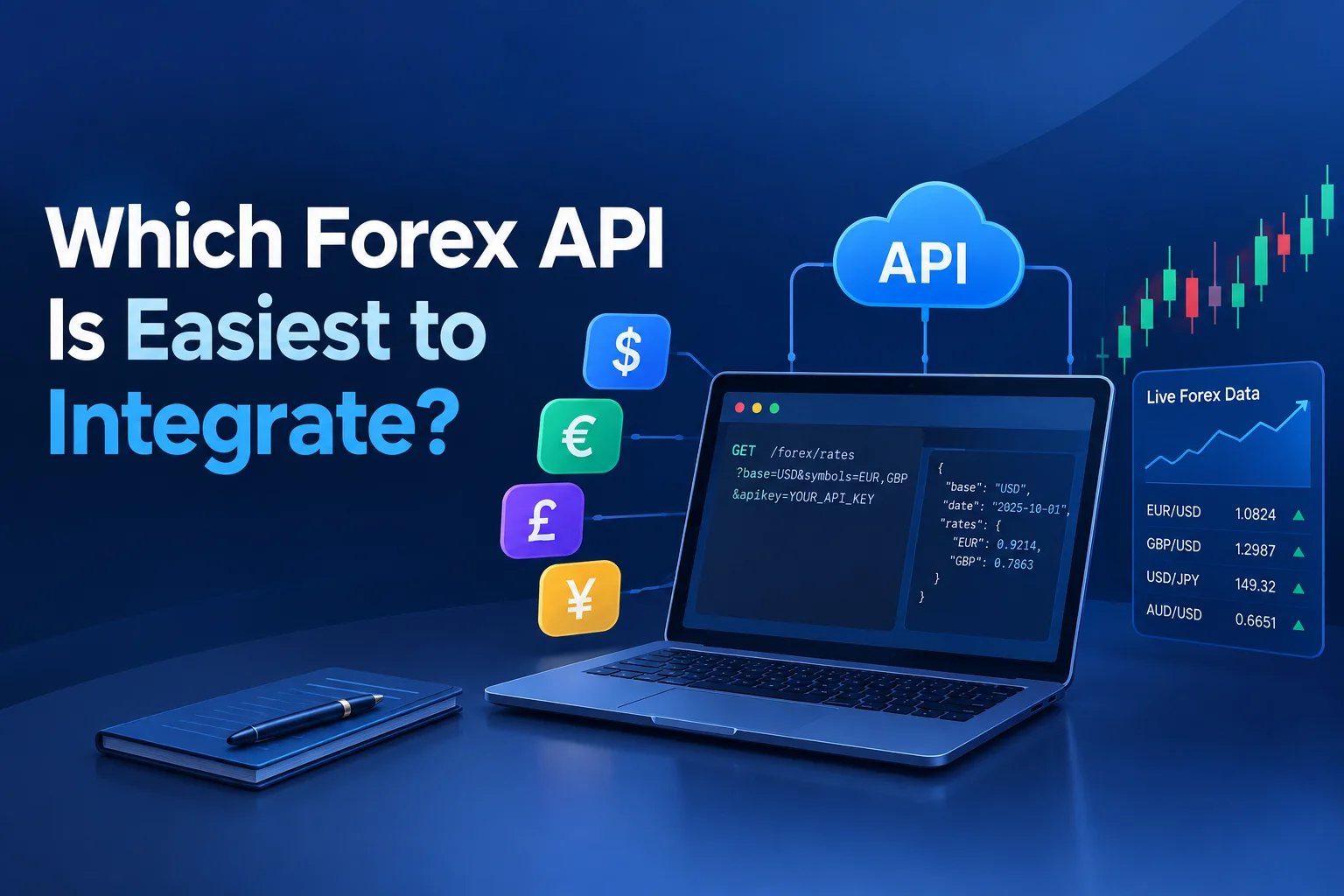
To use a forex news API you make a GET request to the news endpoint with your API key and filter parameters — the response returns headline, timestamp, country, impact level, and currency affected in JSON format.
Here's the problem most developers hit: you build a trading bot that watches price action but it gets whipsawed by surprise central bank statements or employment data releases. You need the news feed integrated directly into your execution logic so the bot knows WHEN to trust the signal and when to stand aside. That's where economic calendar trading APIs come in.
The news endpoint lets you pull upcoming and past economic events with impact ratings (low, medium, high). You filter by currency — in this case CAD and JPY — and get back events like Bank of Canada rate decisions or Japan GDP releases. The response includes expected value, actual value, and previous value so you can measure surprise factor.
GET /api/v3/forex/news?symbol=CAD,JPY&access_key=YOUR_KEY

{
  "status": true,
  "data": [
    {
      "id": "12847",
      "title": "Bank of Canada Interest Rate Decision",
      "country": "CA",
      "date": "2026-06-03 14:00:00",
      "impact": "high",
      "forecast": "4.50%",
      "previous": "4.75%"
    },
    {
      "id": "12851",
      "title": "Japan Unemployment Rate",
      "country": "JP",
      "date": "2026-06-02 23:30:00",
      "impact": "medium",
      "forecast": "2.5%",
      "previous": "2.4%"
    }
  ]
}
You parse that JSON and if there's a high-impact event within the next 4 hours your bot can either pause trading or tighten stop-losses. After the event hits you check if actual matched forecast — if it surprised to the upside for CAD the buy signal on CAD/JPY gets extra weight.
REST API vs WebSocket for Real-Time Forex Data
REST APIs require you to poll the endpoint repeatedly to get updated prices while WebSocket opens a persistent connection that pushes new data to your application instantly without repeated requests.
For news-driven trading you want WebSocket because the 30-second delay from polling a REST endpoint can cost you 20 pips on a volatile release. The WebSocket connection for forex pairs sends tick-by-tick updates with bid, ask, and timestamp. You subscribe to CAD/JPY and every time the price moves you get a push notification in your code.
// WebSocket connection example (Node.js)
const WebSocket = require('ws');
const ws = new WebSocket('wss://fcsapi.com/stream?access_key=YOUR_KEY&symbol=CAD/JPY');

ws.on('message', function incoming(data) {
  const tick = JSON.parse(data);
  console.log(`CAD/JPY: ${tick.price} at ${tick.timestamp}`);

  // Check if price crosses Fibonacci R1
  if (tick.price > 115.576) {
    executeBuyOrder();
  }
});
That code runs continuously and the moment CAD/JPY breaks above the Fibonacci R1 at 115.576 it triggers your buy order. With REST you'd be polling every 5-10 seconds and you might miss the exact breakout level.
Tutorial: Integrating Economic Calendar Trading Alerts
To integrate economic calendar alerts you fetch the news API on a schedule (every hour works), filter for high-impact events in the next 24 hours, and store them in your database — then your trading logic checks that list before executing any orders.
Here's a Python example that pulls CAD and JPY news and flags any high-impact events:
import requests
from datetime import datetime, timedelta

API_KEY = 'your_fcs_api_key'
url = f'https://fcsapi.com/api/v3/forex/news?symbol=CAD,JPY&access_key={API_KEY}'

response = requests.get(url)
news_data = response.json()['data']

high_impact_events = []
now = datetime.now()
next_24h = now + timedelta(hours=24)

for event in news_data:
    event_time = datetime.strptime(event['date'], '%Y-%m-%d %H:%M:%S')
    if event['impact'] == 'high' and now < event_time < next_24h:
        high_impact_events.append(event)

if high_impact_events:
    print(f"WARNING: {len(high_impact_events)} high-impact events in next 24h")
    for e in high_impact_events:
        print(f"{e['title']} at {e['date']}")
else:
    print("Clear to trade - no major news ahead")
You run that script every hour as a cron job. If it finds upcoming Bank of Canada or Bank of Japan announcements your bot either pauses or reduces position size. After the event passes you re-enable full trading. This is how you avoid getting stopped out by a surprise rate hike when your technical setup was perfect.
Best Free Forex API for Developers in 2026
The best free forex API for developers in 2026 is one that combines real-time price data, economic calendar events, technical indicators, and WebSocket streaming in a single service with at least 500 free API calls per month and no credit card required.
Most alternatives force you to pick between coverage and price. Alpha Vantage gives you 25 requests per day for free then jumps to $50/month and they dont even have pivot points or trading signals. Twelve Data has 800 calls/day free which sounds good until you realize their paid tier starts at $29/month and still no signals or pivot data. Polygon.io only covers US markets and costs $29/month minimum — useless if you're trading CAD/JPY.
FCSAPI gives you 500 calls/month free tier, no credit card, and paid plans start at $10/month. You get forex (2000+ pairs), crypto (3000+ coins), stocks (125K+ symbols), plus 50+ technical indicators, pivot points (Fibonacci, Woodie, Camarilla), trading signals, and historical data back to 1995. The WebSocket feed is included in all paid plans.
For the CAD/JPY setup we looked at today you'd use three endpoints: /forex/latest for current price, /forex/indicators for MACD and ADX values, and /forex/news for upcoming Bank of Canada events. That's three API calls to get a complete picture. If you're checking once per hour that's 72 calls per day or about 2160 calls per month — well within the $10/month plan that gives you 10,000 calls.
The real-time forex news API integration is what separates a dumb bot from a smart one. Price action and indicators tell you what's happening but news tells you WHY and more importantly WHEN to expect the next move. The ADX at 31.19 says CAD/JPY has trend strength but if there's a surprise rate cut from the Bank of Canada tomorrow that trend reverses in 60 seconds.
Frequently Asked Questions
Is the FCS API free to use?
Yes, FCSAPI has a free tier with 500 API calls per month and no credit card required. Paid plans start at $10/month for 10,000 calls and include WebSocket access.
What programming languages does it support?
The API returns JSON over HTTP so it works with any language that can make REST requests — Python, JavaScript, PHP, Java, C#, Go, Ruby. WebSocket support is available in most modern languages through standard libraries.
How many API calls are in the free tier?
The free tier includes 500 API calls per month. That's enough to check 16 currency pairs once per day or run hourly checks on 1-2 pairs with news integration.
Does it support WebSocket for real-time data?
Yes, WebSocket streaming is included in all paid plans starting at $10/month. It pushes live tick data for forex, crypto, and stocks without requiring repeated API calls.
What data formats are returned?
All endpoints return JSON format with standardized field names. Historical data can also be exported as CSV through the dashboard for backtesting purposes.
For CAD/JPY trading with news integration start with the $10/month plan — you get real-time prices, all technical indicators, pivot points, and the economic calendar in one package. The buy signal today has ADX confirmation but watch for that Bank of Canada decision on June 3rd before adding to positions. Get your free API key at FCSAPI and try it yourself.