
Choosing the right Forex API is an important decision for developers, traders, financial websites, and businesses that need reliable currency market data. A Forex API connects an application or platform with financial market data, allowing users to access exchange rates, currency prices, historical data, and other information without collecting everything manually.
However, not every Forex API provides the same quality, coverage, speed, or features. Some APIs focus mainly on currency conversion, while others provide real-time Forex market data, historical prices, charts, market analysis, and additional financial information. Understanding these differences can help you select an API that matches your project's actual requirements.
For businesses working with financial data, reliability is especially important. If currency prices are delayed, incomplete, or inconsistent, the information displayed to users may not be useful. Before choosing a provider, it is therefore important to look beyond the basic availability of exchange rates and examine the API's data quality, supported currencies, update frequency, documentation, pricing, and technical capabilities.
Understand What Forex Data You Need
The first step in choosing a Forex API is to clearly understand what type of data your application needs. Different projects can have very different requirements.
A simple currency converter may only need current exchange rates between major currencies. In contrast, a trading platform or financial website may require real-time Forex prices, currency pairs, historical data, market charts, and frequent updates.
You should also consider whether your project needs spot exchange rates, bid and ask prices, historical prices, currency pair information, or other market-related data. Defining these requirements before comparing providers makes the selection process much easier.
For example, a website that displays EUR/USD and GBP/USD prices may need a different API setup from an application that allows users to analyze years of historical Forex data.
Check Real-Time Forex Market Data
Real-time data is one of the most important factors when selecting a Forex API. Currency markets move continuously, so the usefulness of the data depends heavily on how frequently prices are updated.
Some APIs provide delayed data, while others offer real-time or near-real-time market information. If your application depends on current market prices, you should verify the provider's data update frequency before integrating it.
It is also useful to understand what the provider means by "real-time." Check whether the data is genuinely updated continuously, how quickly new prices become available through the API, and whether there are limitations based on the selected plan.
FCS API provides financial market data for Forex along with other asset classes such as cryptocurrencies, stocks, commodities, ETFs, and indices. This can be useful for platforms that want to access multiple types of financial information through a broader financial data provider.
Look at Currency Pair Coverage
Currency coverage is another important consideration. A Forex API may support major currency pairs but have limited coverage for minor or exotic pairs.
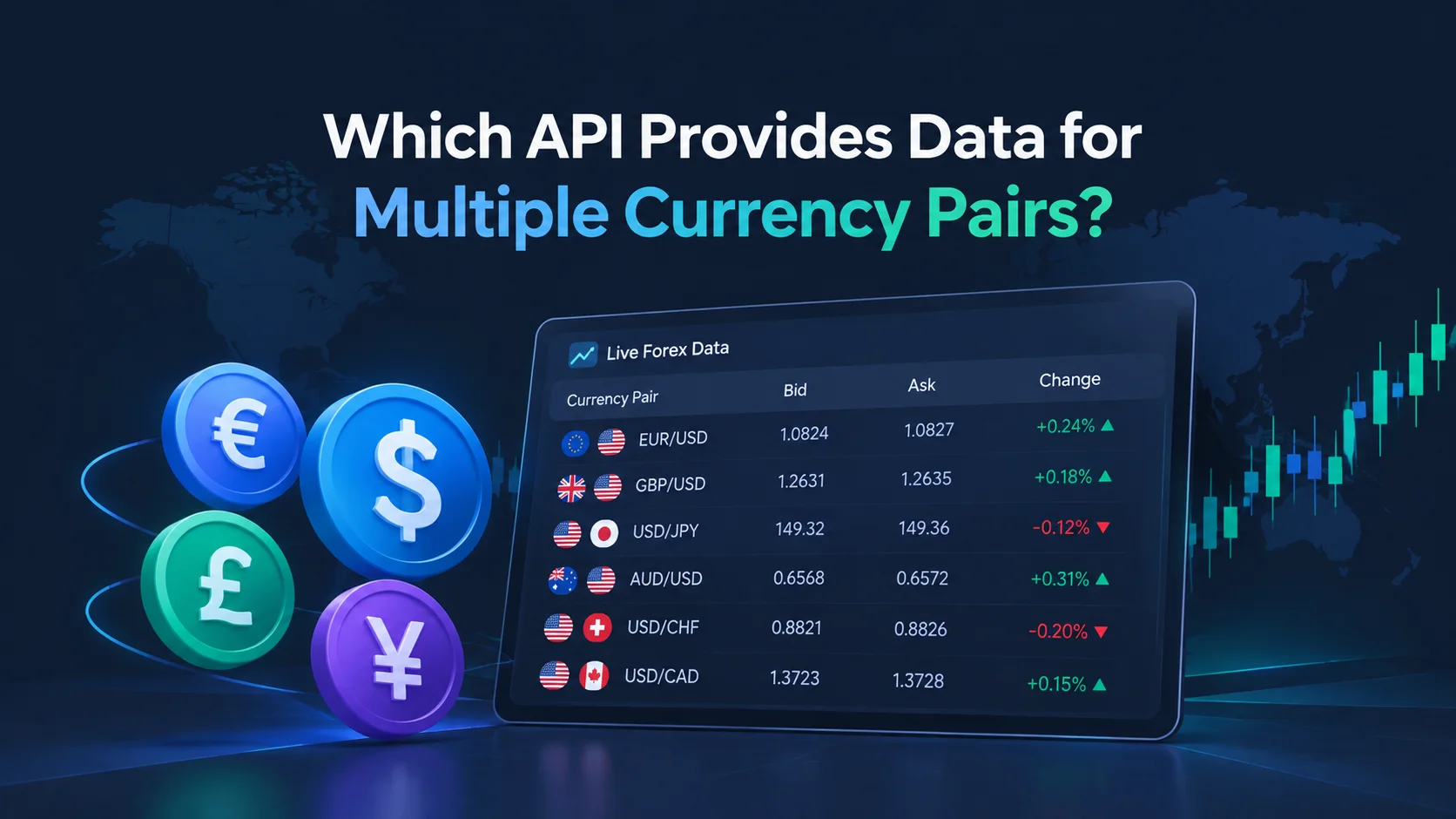
Before choosing a provider, check whether it supports the currency pairs your users need. Major pairs such as EUR/USD, GBP/USD, USD/JPY, and USD/CHF are commonly required, but some applications may also need less frequently traded currencies.
Coverage can become especially important when building a financial platform intended for users from different countries. Supporting a broader range of currencies can allow the application to serve more markets without requiring multiple data sources.
You should also check whether the provider regularly maintains its supported currency list and whether currency pair information is available through simple API endpoints.
Evaluate Historical Forex Data
Current prices are useful, but historical data is equally important for many financial applications. Developers may need historical Forex prices for charts, market analysis, research, backtesting, or educational tools.
When comparing Forex APIs, look at how much historical data is available and how easily it can be accessed. Some providers may offer only a limited historical period, while others provide data going back many years.
It is also important to check the available time intervals. Depending on your application, you may need daily, hourly, or smaller time-frame data.
For example, a financial website may use historical Forex data to create charts showing how EUR/USD has changed over several months. A more advanced application may require more detailed historical intervals for analysis.
Check API Documentation and Ease of Integration
Even a powerful Forex API can become difficult to use if its documentation is unclear. Good documentation helps developers understand endpoints, parameters, authentication methods, response formats, error messages, and usage limits.
Before selecting a provider, review its documentation and see whether the API requests are straightforward. Clear examples can significantly reduce development time, especially when integrating financial data into a new application.
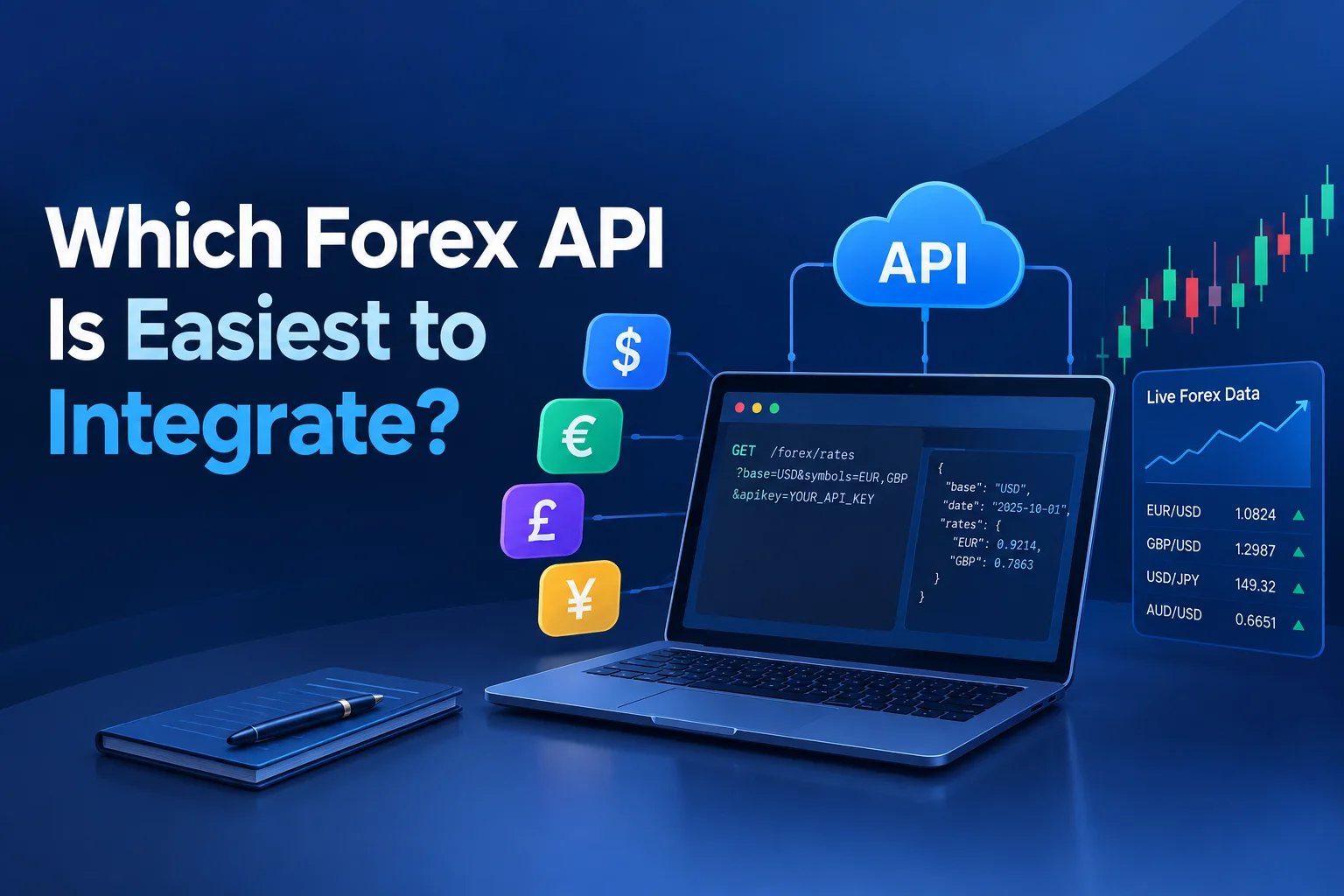
You should also check whether the API uses familiar formats such as JSON and whether it supports standard HTTP requests. Developers should be able to quickly understand how to request currency data and process the response.
A well-documented API can make the difference between a smooth integration and a project that requires unnecessary troubleshooting.
Consider API Response Speed and Reliability
Speed and reliability matter when financial data is displayed to users. An API that frequently becomes unavailable or responds slowly can affect the performance of an entire application.
When evaluating a provider, look for information about uptime, server reliability, response times, and infrastructure. If the provider publishes service-status information or performance documentation, review it before making a decision.
It is also worth testing the API yourself. Send several requests at different times and observe how quickly the responses arrive. This practical test can provide useful information that may not be obvious from a provider's feature page.
For financial websites, consistent access to market data is particularly important because users expect prices and market information to be available when they need them.
Understand API Limits and Usage Restrictions
API limits are another factor that should not be overlooked. Providers often restrict the number of requests that can be made within a specific period.
A small personal project may work comfortably with a lower request limit, while a busy financial website could require significantly more API calls. If your application has many users, the number of requests can increase quickly.
Before choosing a Forex API, determine how many requests your application is likely to make. Then compare that requirement with the provider's limits.
You should also check whether the provider offers different plans for different levels of usage. Understanding these limits in advance can help prevent unexpected interruptions after your application goes live.
Compare Pricing With Your Project Requirements
Price is an important part of choosing a Forex API, but it should be considered alongside the features you actually need.
Free plans can be useful for testing and small projects, but they may have restrictions on request volume, historical data, supported features, or update frequency. Paid plans generally provide greater access, but the cost should match the value and requirements of your application.
Instead of selecting an API simply because it has the lowest price, compare the total package. Consider data coverage, request limits, historical access, documentation, reliability, and additional financial data.
For a growing financial platform, paying for a suitable API can be more practical than repeatedly changing providers because the original service cannot support increased usage.
Check Data Accuracy and Consistency
Financial applications depend on accurate data. If exchange rates are inconsistent or unreliable, users may lose confidence in the platform.
When comparing providers, investigate where the data comes from and how it is processed. You should also check whether the provider explains its data sources and update methods.
Testing the API against trusted market references can help you understand whether the returned prices are consistent with your application's requirements. This is especially important if the API will be used for financial analysis, charts, or other applications where accurate market information matters.
Data consistency is also important. Your application should receive responses in a predictable structure so that developers can process the information correctly.
Look for Additional Financial Market Data
Sometimes choosing a Forex API is not only about Forex. A financial platform may eventually need information about stocks, cryptocurrencies, commodities, ETFs, or indices.
Using a provider that covers multiple asset classes can make it easier to expand a financial application later. Instead of integrating several unrelated APIs, developers may be able to access different financial datasets from one platform.
FCS API is designed as a broader financial information platform, covering Forex alongside cryptocurrencies, stocks, commodities, ETFs, and indices. It also provides market-related features such as charts, economic updates, news, and educational content.
This type of broader coverage can be useful when a website or application is expected to grow beyond currency data.
Check Charts and Market Analysis Features
Charts can make financial data easier for users to understand. If your application needs to display Forex price movements, check whether the API provider supports the data required to build useful charts.
Historical prices, different time intervals, and consistent market data can all contribute to better charting functionality.
Some financial data platforms also provide additional market information such as news and economic updates. These features can help developers build a more complete financial experience instead of displaying exchange rates alone.
For example, a financial website could combine Forex prices with historical charts and economic information so users can view market data in a broader context.
Consider Scalability Before Integration
Your current requirements may be small, but your application could grow over time. Choosing an API that can scale with your project can prevent technical problems later.
Consider how many users you expect to have in the future and how frequently your application will request market data. You should also consider whether you may add more currencies, asset classes, charts, or financial features.
A scalable API provider should offer plans and infrastructure that can accommodate increased usage. This is particularly important for businesses building financial applications as a long-term product rather than a short-term experiment.
Test the API Before Making a Final Decision
One of the simplest ways to choose the right Forex API is to test it before committing to a long-term integration.
Start by making basic requests for currency pairs you expect to use. Then test historical data, response speed, authentication, request limits, and error handling.
During testing, pay attention to how easy it is to understand the returned data. A technically powerful API is much more useful when developers can integrate it without unnecessary complexity.
Testing also gives you an opportunity to identify limitations before they affect your users. If the API performs well during development and provides the required Forex data in a consistent format, integration is likely to be more straightforward.
Choose a Forex API Based on Your Actual Requirements
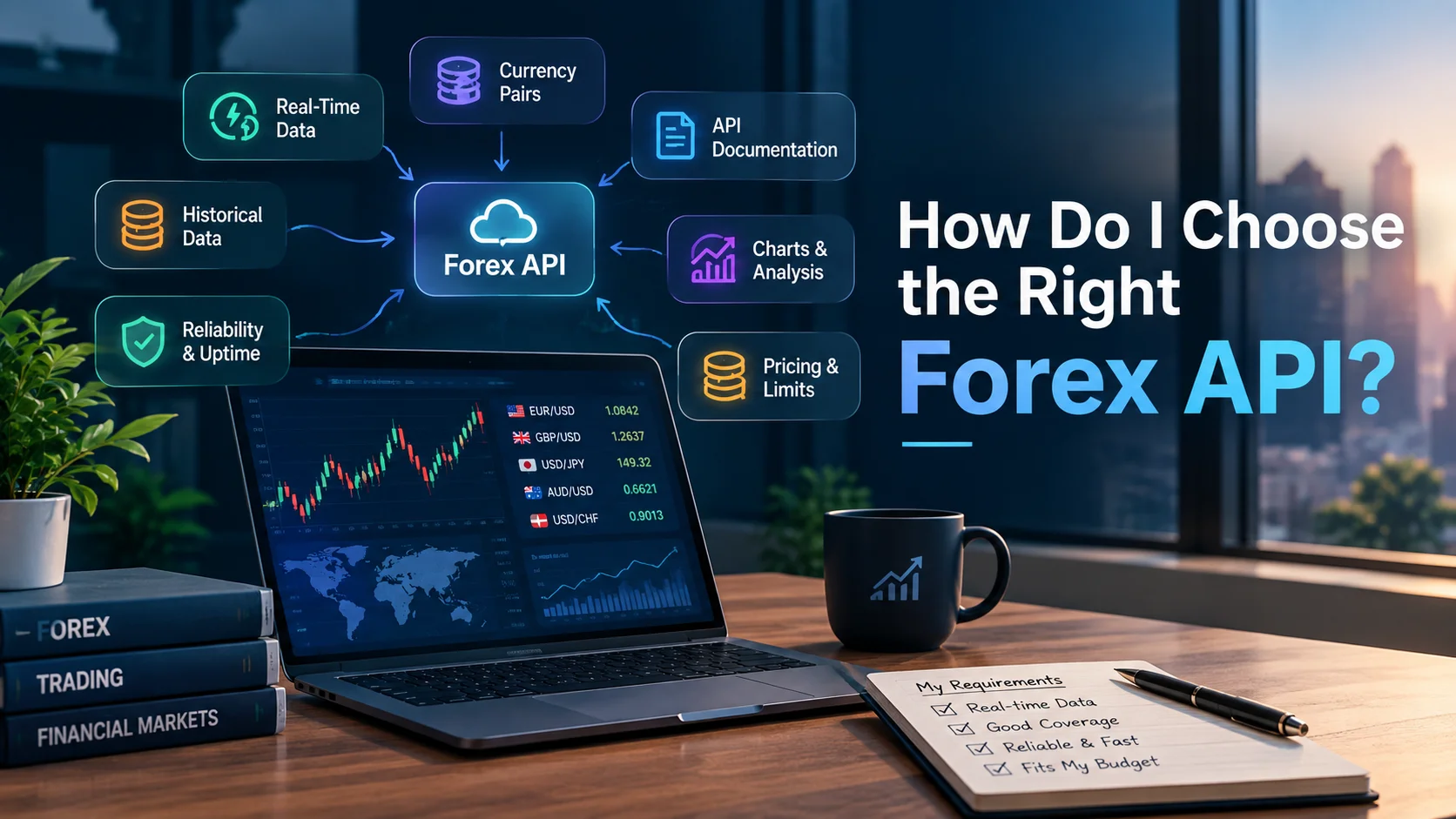
Choosing the right Forex API ultimately starts with understanding what your application needs. Real-time data, currency coverage, historical information, API documentation, reliability, pricing, request limits, and scalability should all be considered before integration.
For a project focused only on basic exchange rates, a simple API may be sufficient. For a financial website or application that needs real-time Forex prices, historical data, charts, and information across several asset classes, a broader financial data platform may provide more functionality.
FCS API provides access to Forex and other financial market data, including cryptocurrencies, stocks, commodities, ETFs, and indices, along with charts, news, economic updates, and educational financial content. This gives developers the flexibility to build applications that go beyond basic currency conversion while keeping financial market data available through a dedicated API platform.