
Modern trading platforms depend on accurate and timely financial data to provide useful information to their users. Whether a platform is designed for individual traders, financial researchers, investment websites, or professional market applications, access to structured market data is an important part of the system.
A Stock Data API makes it possible for applications to connect with financial data without building an entire market data infrastructure from scratch. Developers can use an API to retrieve stock prices, historical information, trading data, company details, and other market information and then display it through websites, dashboards, mobile applications, and trading tools.
As financial technology continues to develop, APIs have become an important connection between financial data providers and modern trading platforms. Understanding how they work can help developers build applications that provide useful and organized market information.
What Is a Stock Data API
A Stock Data API is a software interface that allows an application to request stock market information from an external data provider. Instead of manually collecting market information, a developer can send an API request and receive structured data that can be processed by the application.
The returned information may include stock prices, symbols, market status, trading volume, opening prices, closing prices, daily highs and lows, and historical market information. The exact data available depends on the API provider and subscription plan.
For example, a trading dashboard can request information for a particular stock and use the returned data to display its current price, previous close, daily range, and other available market details.
This approach allows developers to focus on building the user experience and application features while the API handles access to financial data.
Why Trading Platforms Need Reliable Market Data
Trading platforms need market information to help users understand what is happening in financial markets. Price information is often the foundation of trading dashboards, watchlists, charts, screeners, and research tools.
When users open a trading application, they may expect to see updated prices and market information without manually refreshing multiple sources. An API can help applications retrieve this information programmatically.
Data quality and update frequency are therefore important considerations. If an application displays outdated information, users may not have an accurate view of current market conditions.
For this reason, developers should evaluate how frequently a Stock Data API updates its information and what type of market data it provides before integrating it into a trading platform.
Supporting Real Time Market Information
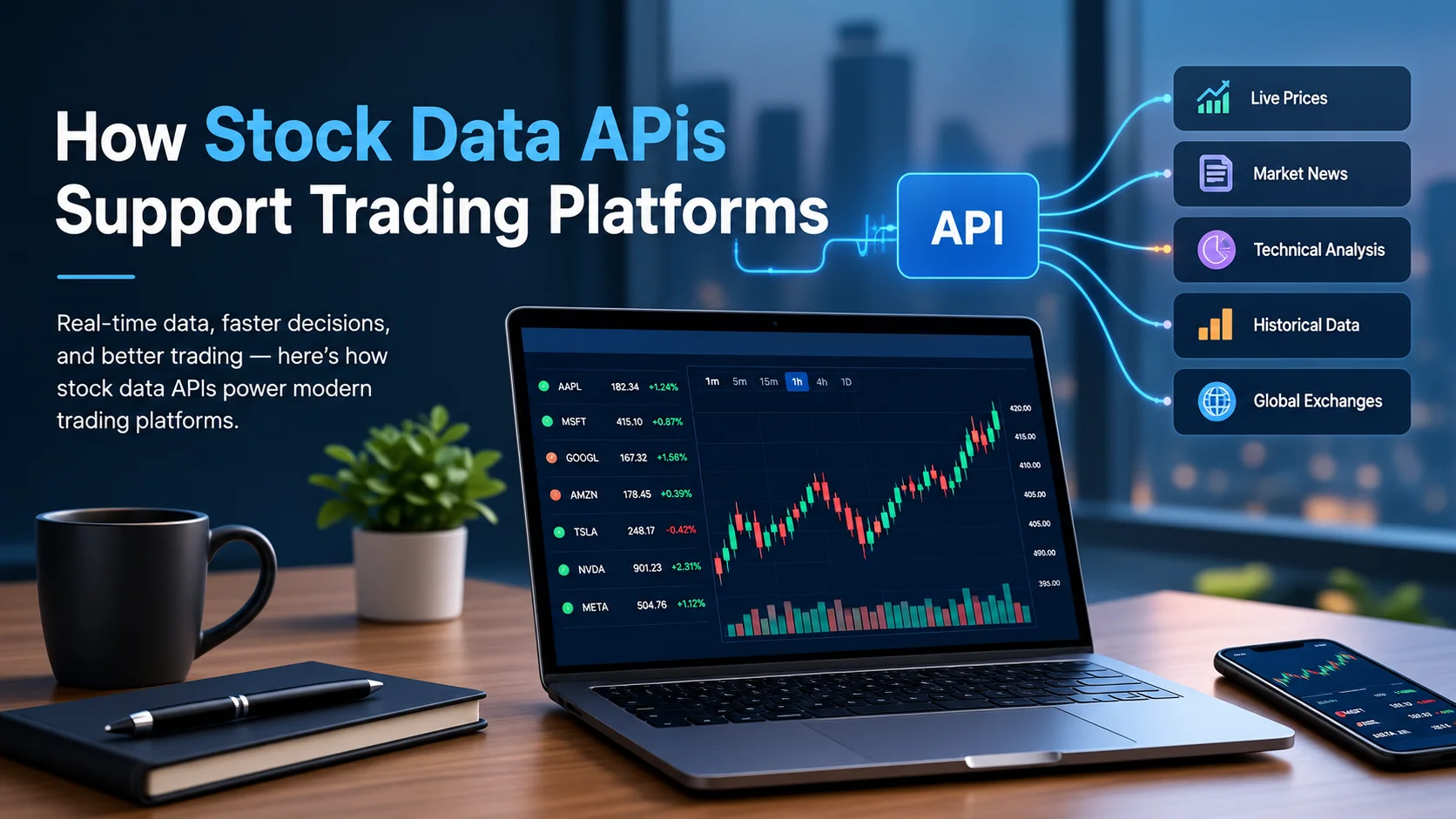
One of the most common uses of financial APIs is providing current market information. Trading applications can use API requests to retrieve updated prices and other market fields.
Depending on the provider, the available data may include the latest price, percentage change, volume, opening price, daily high, daily low, and previous closing price.
A platform can then process this information and display it through a market dashboard. For example, a watchlist can show multiple stocks and their latest available data in one place.
The exact meaning of real-time data can differ between providers and markets, so developers should always check the provider's documentation for update frequency and data availability.
Powering Trading Charts
Charts are an important feature of many trading platforms. They allow users to examine price movements over different periods and understand historical market behavior.
Stock Data APIs can provide the underlying price information required to create these charts. An application may request historical prices for a particular stock and organize the returned data by date and time.
The platform can then use this information to create line charts, candlestick charts, or other visual representations.
For example, a user may want to compare a stock's performance over one day, one month, or one year. Historical API data can provide the values needed to generate these different views.
Building Stock Watchlists
Watchlists allow users to monitor selected stocks from one place. A trading platform can use a Stock Data API to retrieve information for multiple symbols and display the results in a personalized dashboard.
A user might add several companies to a watchlist and monitor their latest prices, daily changes, or trading volume.
From a technical perspective, the application sends requests for the required symbols and processes the returned data. The interface can then update the relevant values according to the application's design and the API's available update frequency.
This can make financial monitoring more convenient because users do not need to search for each stock separately.
Supporting Stock Screeners
Stock screeners help users filter stocks according to specific characteristics. Depending on the available data, a screener might allow users to search for stocks based on price, market capitalization, trading volume, exchange, or other financial fields.
A Stock Data API can provide the underlying information needed by these tools. The trading platform can retrieve data and apply filtering rules to identify stocks matching the user's selected conditions.
For developers, this means an API can become part of the data layer behind a more advanced financial research tool.
The quality and range of available fields are especially important when building screeners because limited data can restrict the types of filters the platform can offer.
Using Historical Data for Research
Trading platforms are not only used to display current prices. Many users also want to study previous market behavior.
Historical stock data can support research features such as performance comparisons, historical charts, price analysis, and educational tools. Developers can request information for specific periods and use it to create different types of analysis.
For example, an application could allow a user to compare the historical performance of several stocks over the same period.
Historical data can also be useful for developers testing financial application features because it provides a larger dataset than a single current market price.
Connecting Multiple Financial Markets
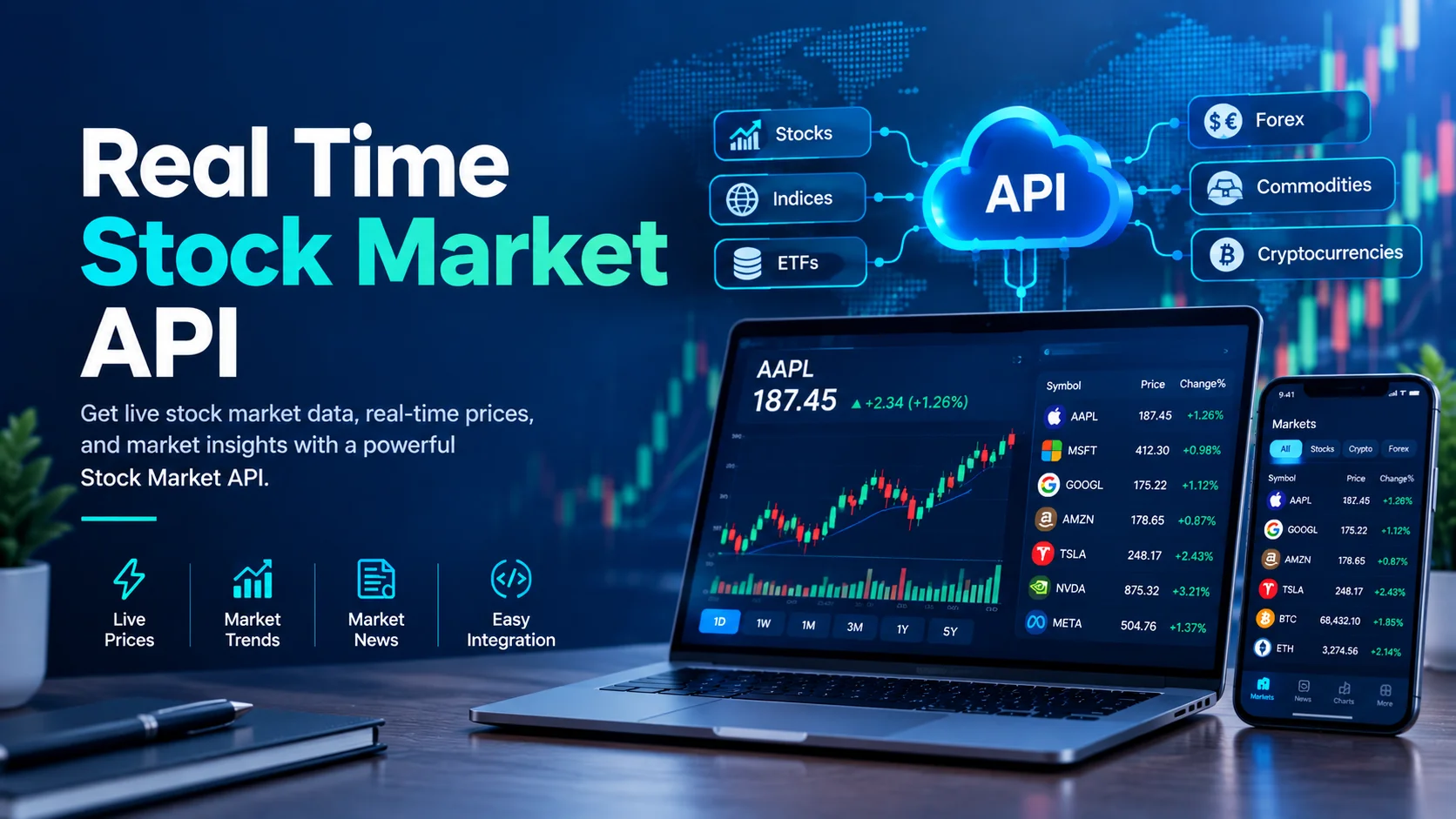
Modern financial platforms often provide more than stock information. Users may also be interested in currencies, cryptocurrencies, commodities, ETFs, and market indices.
A financial data provider that supports multiple asset classes can make it easier for developers to expand their platforms.
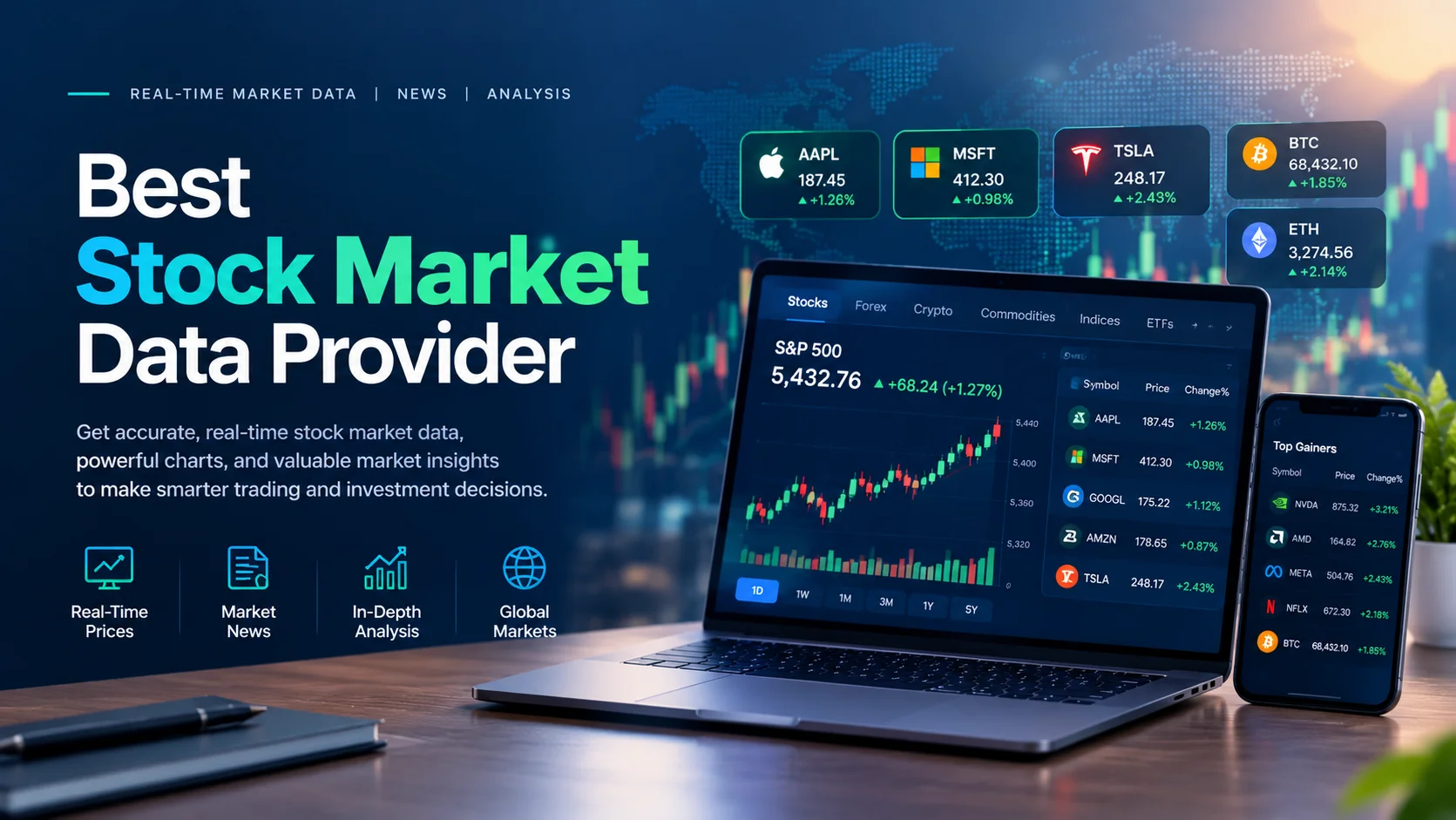
FCS API is a financial information platform that provides market data, news, and analysis across global financial markets. Its coverage includes stocks, cryptocurrencies, forex, commodities, ETFs, and indices. The platform also provides charts, economic updates, and educational content.
For a trading platform that plans to support multiple financial markets, having access to different types of market information through one financial data platform can simplify development and data management.
Improving Financial Application Development
Building a complete market data infrastructure can require significant development resources. Developers need systems for collecting, organizing, updating, and delivering financial information to users.
Using an API can reduce some of this complexity. Instead of creating a market data collection system from the beginning, developers can connect their applications to an established data provider.
The API can serve as the connection between the financial data source and the application. The application can then transform the received information into dashboards, charts, watchlists, screeners, and other features.
This allows development teams to spend more time working on application functionality and user experience.
Considering API Performance and Limits
When integrating a Stock Data API into a trading platform, developers should consider performance and request limits. A platform with many users may generate a large number of API requests.
If the provider has strict request limits, developers need to design their applications accordingly. Caching frequently requested information, managing requests efficiently, and avoiding unnecessary calls can help reduce API usage.
Response speed can also affect the user experience. Developers should test how quickly the API responds under expected conditions and understand how the service handles high usage.
These technical considerations should be reviewed before launching a trading application.
Choosing the Right Stock Data API
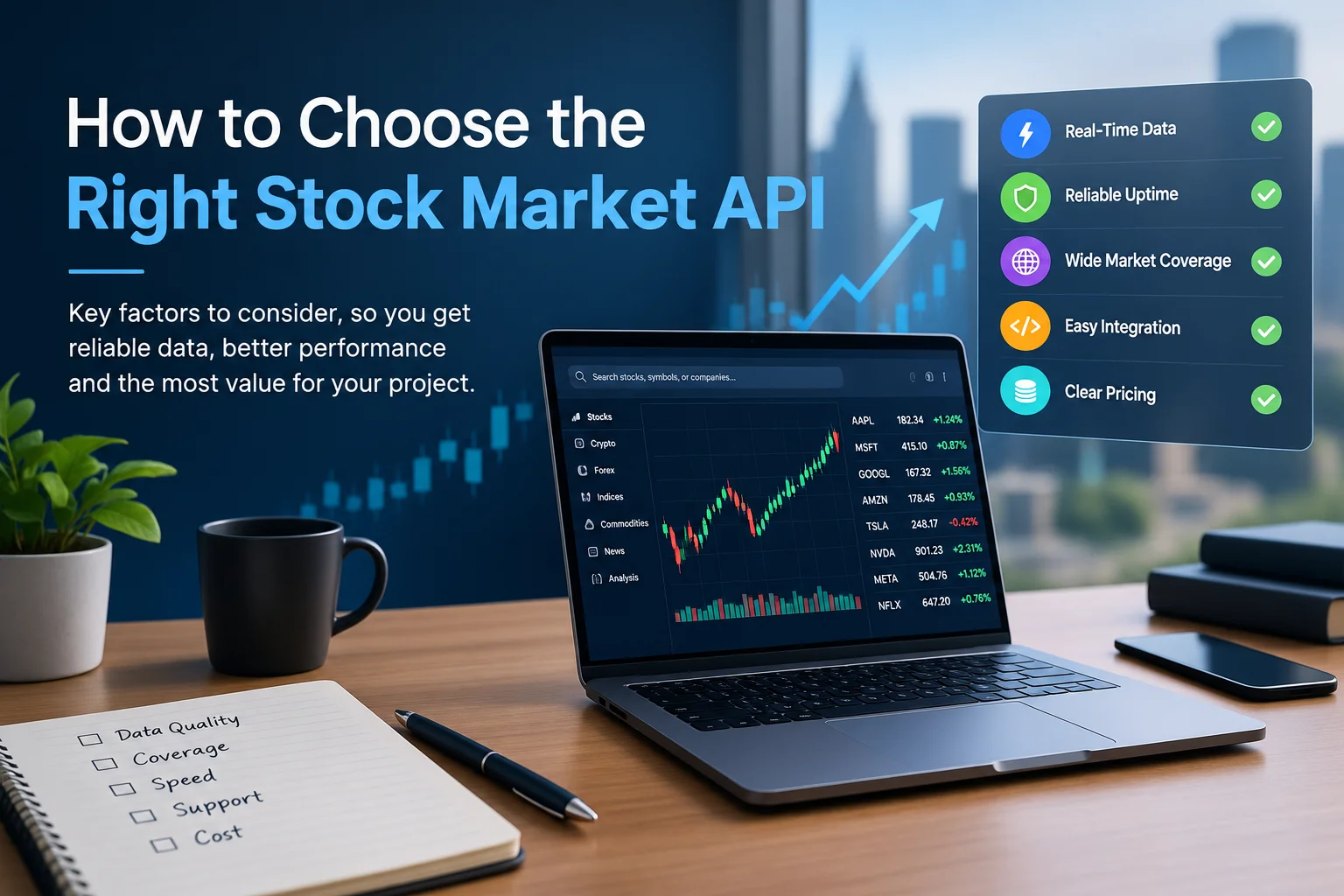
Not every Stock Data API is designed for the same purpose. Developers should compare providers based on the requirements of their platform.
Important factors include market coverage, available stock information, historical data, update frequency, documentation, API limits, pricing, reliability, and supported features.
Documentation is particularly important because developers need to understand endpoints, parameters, authentication, response formats, and error handling before integrating an API.
It is also useful to test the API before making a long-term decision. A practical test can show whether the available data fits the application's requirements and whether the integration process is straightforward.