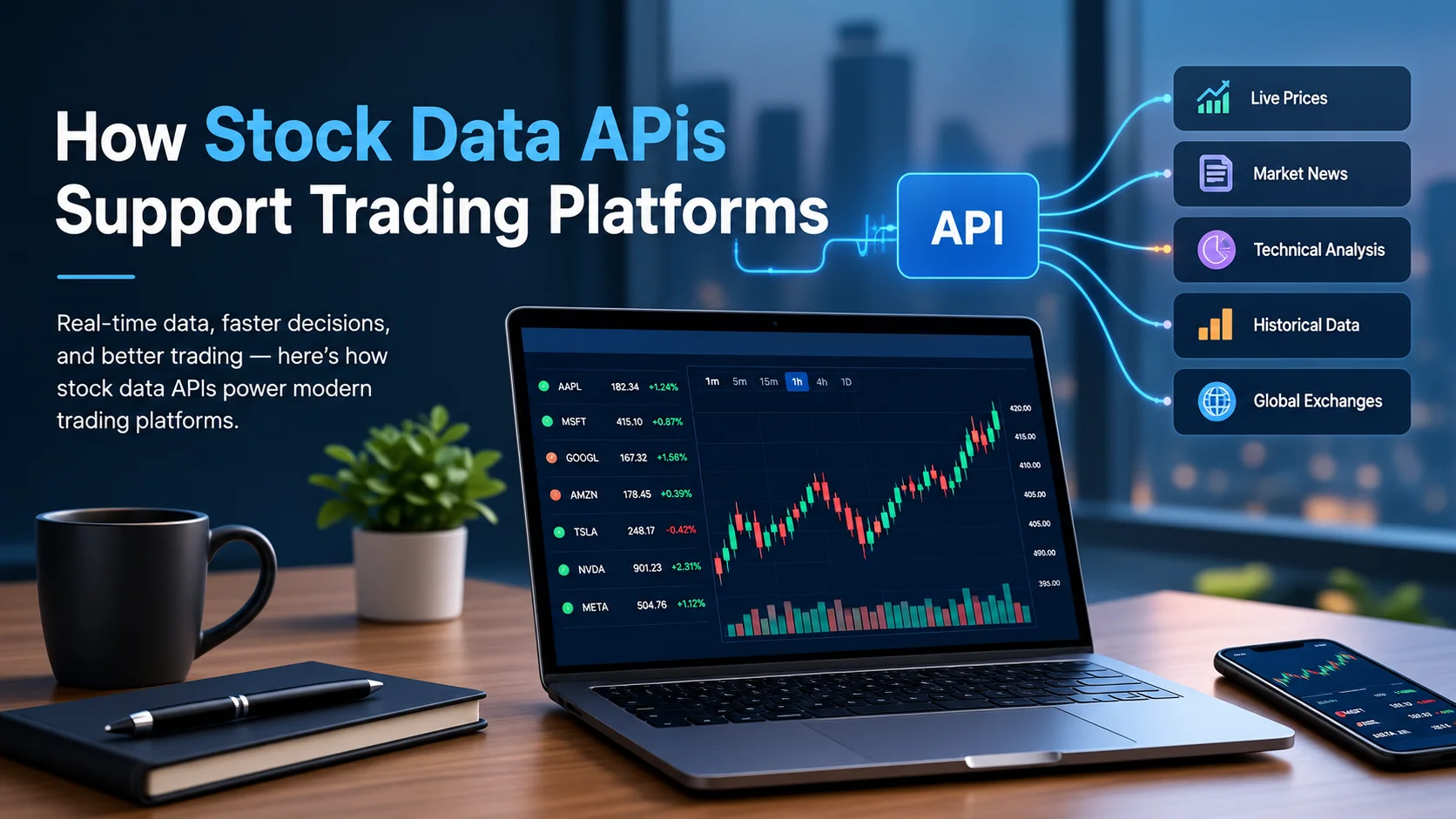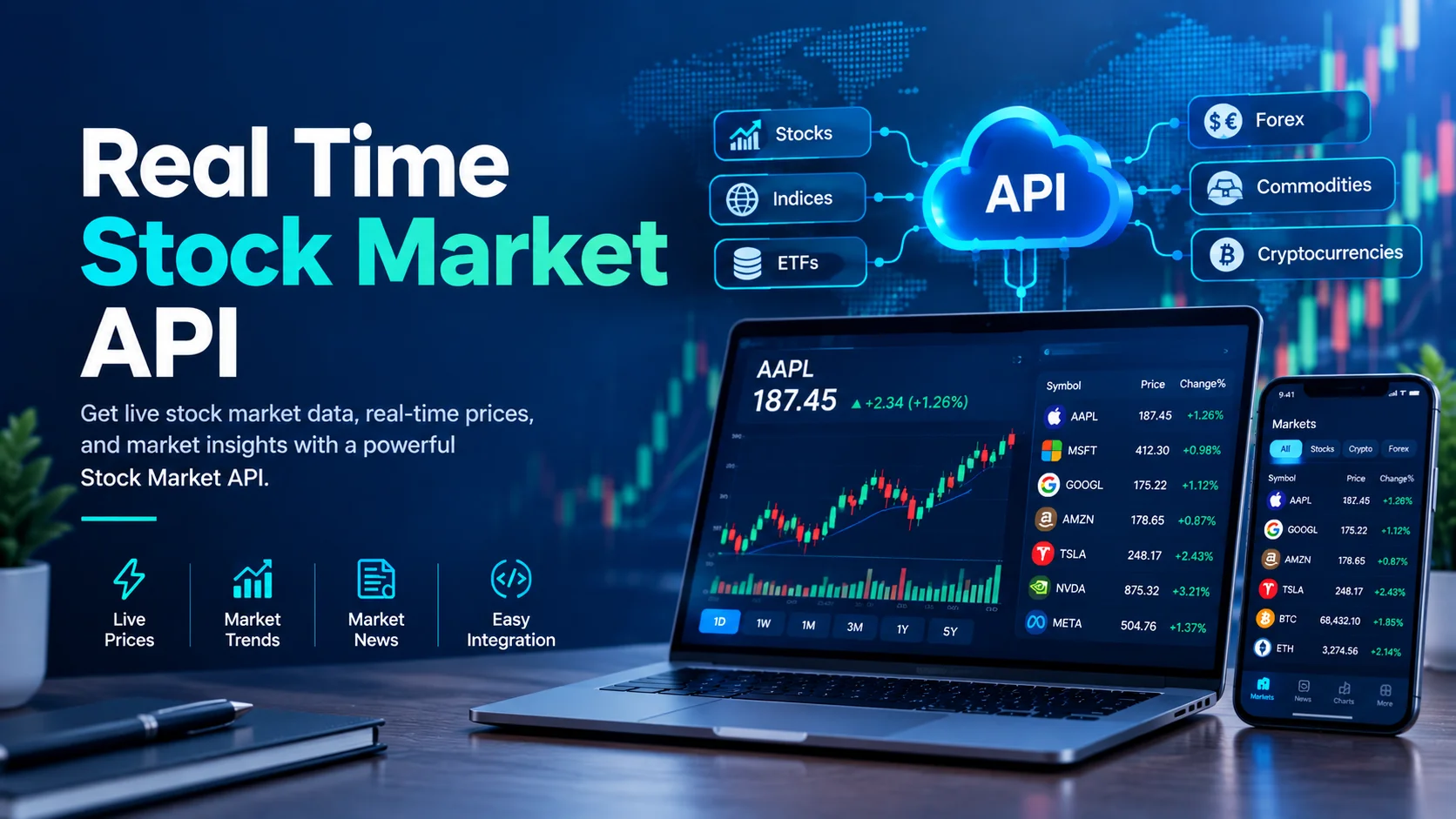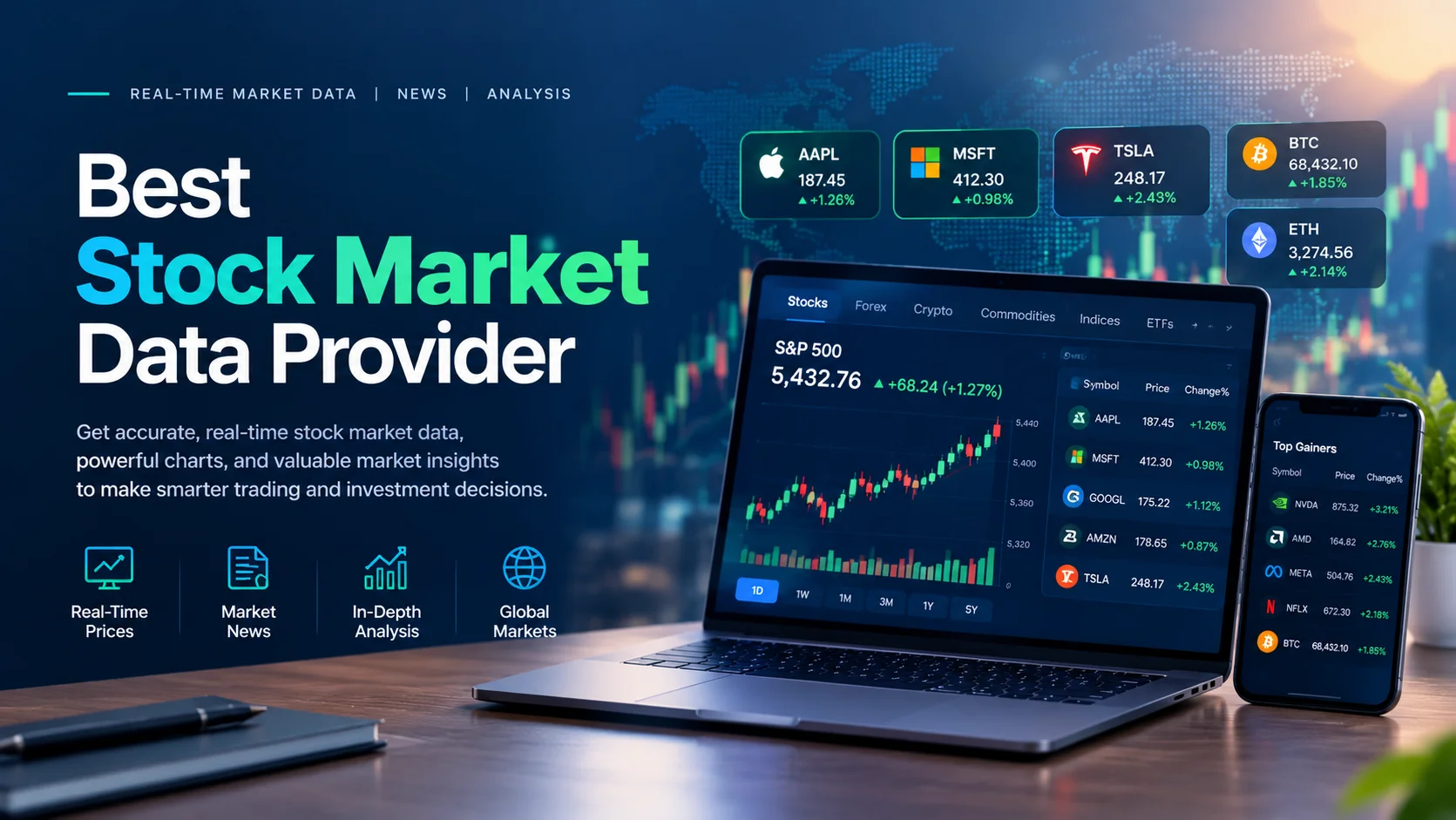

Choosing the right Stock Market API is important for businesses, developers, traders, and financial platforms that need reliable market data. A good API can make it easier to access stock prices, historical information, company data, market statistics, and other financial information without building a complete data system from the beginning.
Today, many platforms depend on APIs to bring financial data into websites, mobile applications, dashboards, trading tools, and research platforms. However, not every Stock Market API offers the same data coverage, speed, reliability, or features. Understanding what to look for before choosing an API can help you avoid technical problems and select a solution that matches your project.
Understand Your Data Requirements
The first step is to understand exactly what type of stock data your project needs. Different applications may require different types of information. A financial dashboard may need live stock prices, while a research application may depend more on historical market data.
If you are developing a trading-related application, real-time or near-real-time prices can be important. On the other hand, an educational website may only need delayed or historical information. Some applications also require company profiles, stock symbols, exchange information, market trends, or financial statistics.
Before selecting a Stock Market API, think about the data your application will use now and what it may need in the future. This helps you choose an API that can support your project as it grows.
Check Real Time Stock Data Availability
Real-time data is one of the most important considerations when selecting a Stock Market API. Market prices can change quickly, so applications that display current market conditions need a data source that updates frequently.
Check how often the API updates its data and whether the provider clearly explains its update frequency. You should also understand whether the prices are real-time, delayed, or historical.
For example, a stock tracking application may display the latest price, daily high, daily low, opening price, closing price, and trading volume. If this information is not updated regularly, users may see market conditions that are no longer current.
A reliable API should provide clear information about its data freshness so developers know what they are integrating into their applications.
Look at Stock Exchange Coverage
Stock market data is not limited to one exchange. Depending on your audience, you may need information from multiple exchanges and countries.
Before choosing an API, check which exchanges it supports. A provider with broad exchange coverage can be useful if your application targets international users or tracks companies from different regions.
You should also check whether the API provides exchange-specific information such as symbols, trading status, currencies, and market identifiers. This becomes particularly important when building applications that combine data from different markets.
FCS API is designed as a financial information platform covering global financial markets. Along with stocks, its platform provides access to data related to cryptocurrencies, forex, commodities, ETFs, and indices. This broader coverage can be useful for projects that may expand beyond stocks in the future.
Evaluate Historical Market Data
Real-time prices are useful, but historical data is equally important for many financial applications. Developers may need historical prices to create charts, compare market performance, analyze trends, or develop research tools.
When evaluating an API, check how much historical information is available and how it can be accessed. Look at options such as daily prices, historical closing prices, trading volume, and other available market information.
It is also important to understand how historical data is structured. A well-designed API should make it straightforward for developers to request specific symbols and date ranges without unnecessary complexity.
Good historical coverage can make an API more useful for both technical applications and financial research.
Review API Documentation
Clear documentation can save developers a significant amount of time. Even an API with extensive data can become difficult to use if its documentation is confusing or incomplete.
Before choosing a Stock Market API, review its documentation carefully. Look for information about authentication, endpoints, parameters, response formats, request limits, errors, and examples.
Developers should be able to understand how to make a request and interpret the response without spending excessive time searching for basic information.
Documentation should also explain important technical details such as supported parameters and data formats. Common formats such as JSON are widely used in modern web applications because they are easy to process with many programming languages.
Consider API Performance and Reliability
Performance matters when an application depends on external financial data. If API responses are consistently slow, users may experience delays when loading prices, charts, or market information.
Reliability is also important. If the API frequently becomes unavailable, applications depending on it may stop displaying important information.
When comparing providers, investigate their infrastructure, uptime information, rate limits, and general service reliability. You should also understand what happens when the API reaches its request limit or experiences an outage.
A reliable Stock Market API should provide predictable access to data and clear information about service limitations.
Understand Pricing and API Limits
Price is another important factor when selecting an API. Different providers may use different pricing structures based on requests, data access, features, or subscription levels.
A free plan can be useful for testing an API or building a small project. However, larger applications may need higher request limits, additional data, or commercial access.
Do not look only at the monthly subscription price. Consider how many API requests are included, what data is available, and whether additional usage creates extra costs.
Understanding these details early can prevent unexpected expenses when your application starts receiving more traffic.
Check Ease of Integration
An API should fit naturally into your technology stack. Developers may use languages and frameworks such as Python, JavaScript, PHP, Java, or other technologies.
Look for API documentation and examples that match your development environment. Simple authentication and predictable endpoints can also make integration easier.
For example, a developer building a stock dashboard may need to request a symbol, receive the latest market data, and then display the response on a website. A well-structured API can make this process much easier.
The simpler the integration process, the less development time may be required to build and maintain the application.
Think About Scalability
An API that works for a small project may not always be suitable for a growing application. As traffic increases, the number of API requests can increase as well.
Consider your expected usage before choosing a provider. If you plan to build a financial website, trading dashboard, mobile application, or market research platform, think about how many users may eventually access the data.
A scalable Stock Market API should offer plans or infrastructure that can accommodate increasing usage. This allows you to continue using the same data provider instead of rebuilding your integration later.
Check Security and Authentication
Financial applications should also consider API security. Most APIs use authentication methods such as API keys to control access.
Check how the provider handles authentication and whether the documentation explains secure API usage. API credentials should not be exposed publicly in frontend code or shared unnecessarily.
Developers should also understand how authentication works when building applications with server-side and client-side components. Following secure integration practices can reduce the risk of unauthorized access.
Look Beyond Stock Data
Your current project may focus only on stocks, but financial applications often expand into other markets. A provider that supports multiple asset classes can reduce the need to integrate several different APIs.
FCS API provides financial information across stocks, cryptocurrencies, forex, commodities, ETFs, and indices. Its platform also includes market-related news, analysis, charts, economic updates, and educational content.
For developers building broader financial applications, having multiple types of market information available through one platform can simplify the overall data architecture.
Test the API Before Making a Decision
Before committing to a Stock Market API, test it with a real development project. Use sample requests and check the response time, data quality, documentation, and available information.
Testing also helps you discover limitations that may not be obvious from a pricing page. You can determine whether the API provides the exact symbols and data fields your application needs.
A short testing period can save considerable development time later.
Choose an API That Matches Your Project
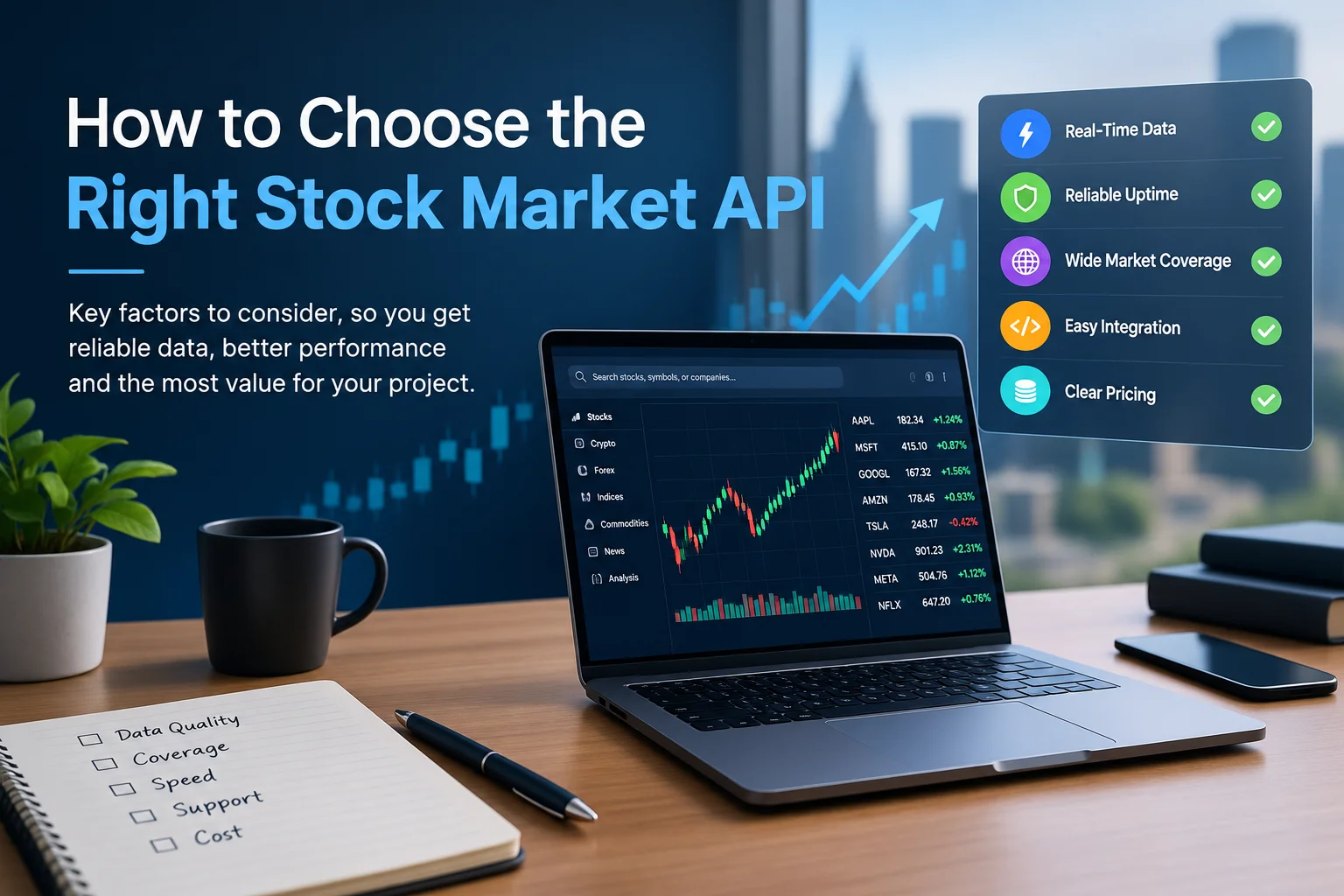
There is no single Stock Market API that is suitable for every project. The right choice depends on your data requirements, market coverage, update frequency, historical data, documentation, performance, pricing, and expected usage.
Developers should focus on the actual requirements of their application instead of choosing an API based only on price. A low-cost service may not provide the data coverage or request capacity required by a growing platform, while a more advanced service may include features that a small project does not need.
FCS API provides access to financial market data across multiple asset classes, making it an option for projects that need stock information today and broader financial data in the future. By comparing data coverage, technical features, reliability, pricing, and scalability, developers can make a more informed decision and choose an API that fits their application.
The best approach is to clearly define your requirements, test potential providers, review their documentation, and consider how your project may grow. With the right Stock Market API, developers can spend less time building data infrastructure and more time creating useful financial applications and tools.