
Financial markets can change within seconds. Stock prices move throughout trading sessions, trading volume can increase quickly, and market sentiment can change after important news or economic events. For traders, investors, financial businesses, and developers, having access to timely market information is therefore an important part of working with modern financial technology.
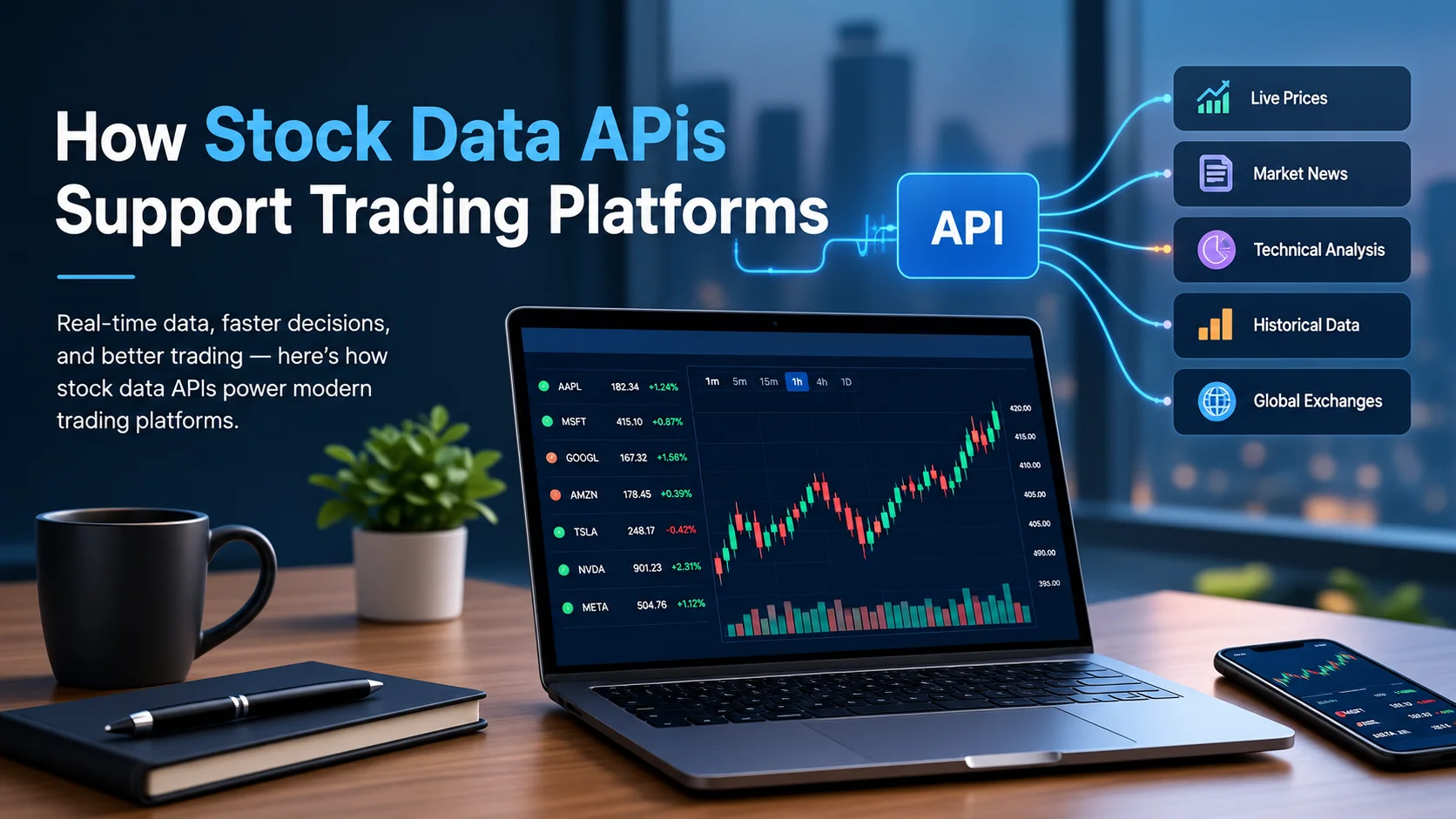
A Real Time Stock Market API provides a practical way to connect applications with stock market information. Instead of collecting prices manually, developers can use an API to request market data and display it automatically on websites, mobile applications, dashboards, and financial platforms.
Today, APIs have become an important part of financial technology. They allow developers to integrate market information into custom applications without building an entire market data system from scratch. From stock tracking applications to financial research platforms, real-time market data can support many different use cases.
What Is a Real Time Stock Market API?
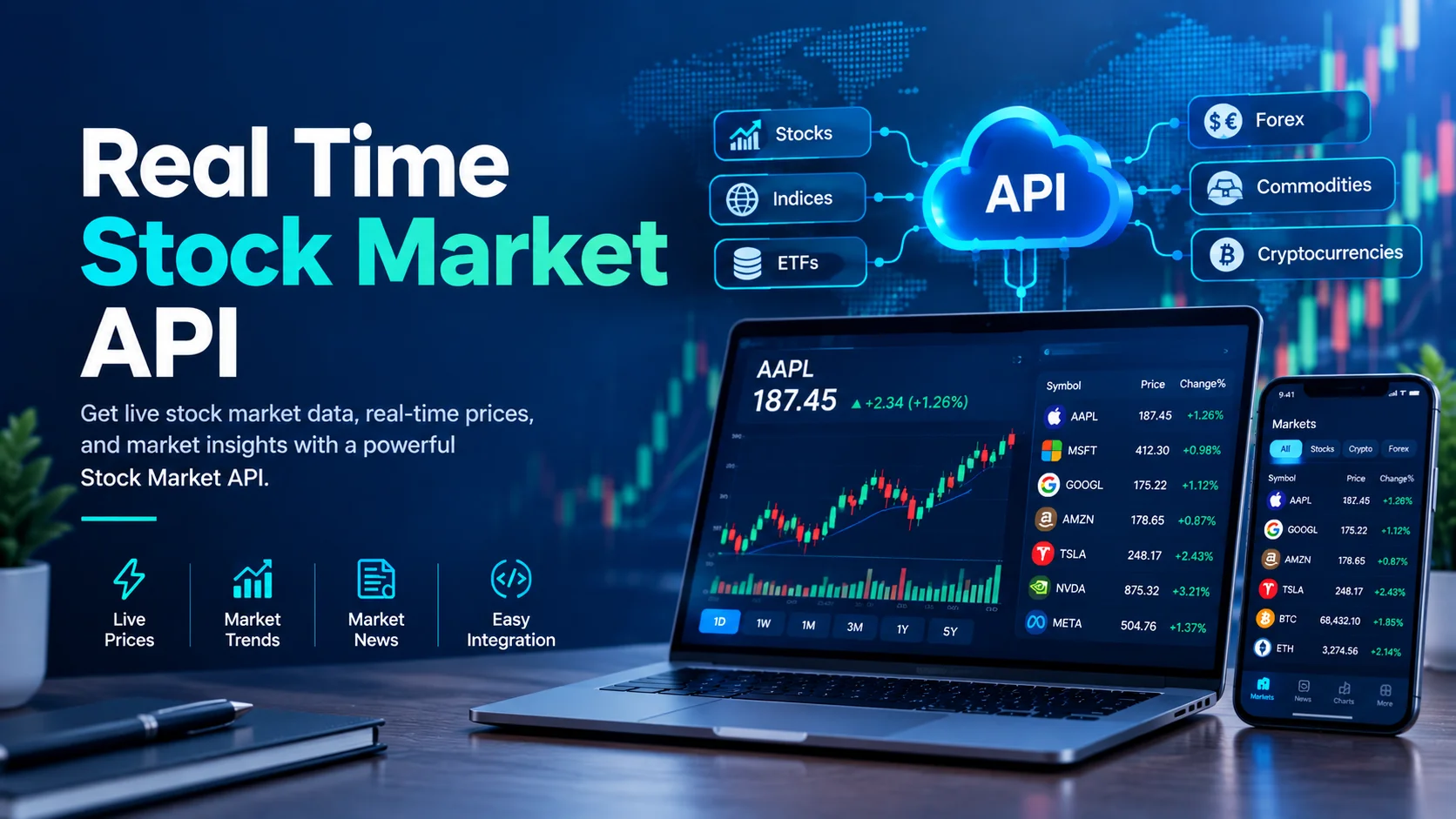
A Real Time Stock Market API is a software interface that allows applications to access frequently updated stock market information. The API acts as a connection between a financial data provider and the application using the data.
For example, imagine a developer is building a stock price dashboard. The dashboard needs to show the current price of different stocks. Instead of manually updating every price, the application can send requests to an API and receive the latest available market information.
The application can then process the response and display prices, percentage changes, trading volume, charts, and other available information.
The exact definition of "real time" can vary depending on the provider, exchange, endpoint, and data plan. Therefore, developers should always check the update frequency and data terms of the API before using it for applications that require highly time-sensitive information.
Why Real Time Stock Market Data Matters
Stock market information can become outdated quickly. A price displayed several minutes ago may no longer represent the latest market condition. This is especially important for applications designed for active traders or users who frequently monitor market movements.
Real-time or frequently updated data can help applications provide a more current view of the market. Investors can monitor price movements, while developers can build interfaces that automatically refresh market information.
For financial websites, timely data can also improve the user experience. Visitors do not have to refresh a page repeatedly to find updated information if the application is designed to retrieve new data automatically.
However, real-time data should be viewed as an information resource rather than a guarantee of investment results. Market data can help users understand what is happening, but financial decisions involve many other factors.
How a Real Time Stock Market API Works
The process behind a stock market API is relatively straightforward from a developer's perspective. An application first connects to an API provider using the provider's authentication method. The application then sends a request for specific financial information.
The request can include details such as a stock symbol, market, endpoint, or other supported parameters. The API processes the request and returns structured information to the application.
Many APIs return data in formats such as JSON because these formats are easy for modern programming languages and web applications to process. The application can then use the returned information to update a stock price display, create a chart, calculate changes, or perform additional analysis.
For example, a developer may request information for a particular stock symbol. The response could contain the latest available price, price change, percentage change, and trading information, depending on the provider's available endpoints.
Key Features to Look For
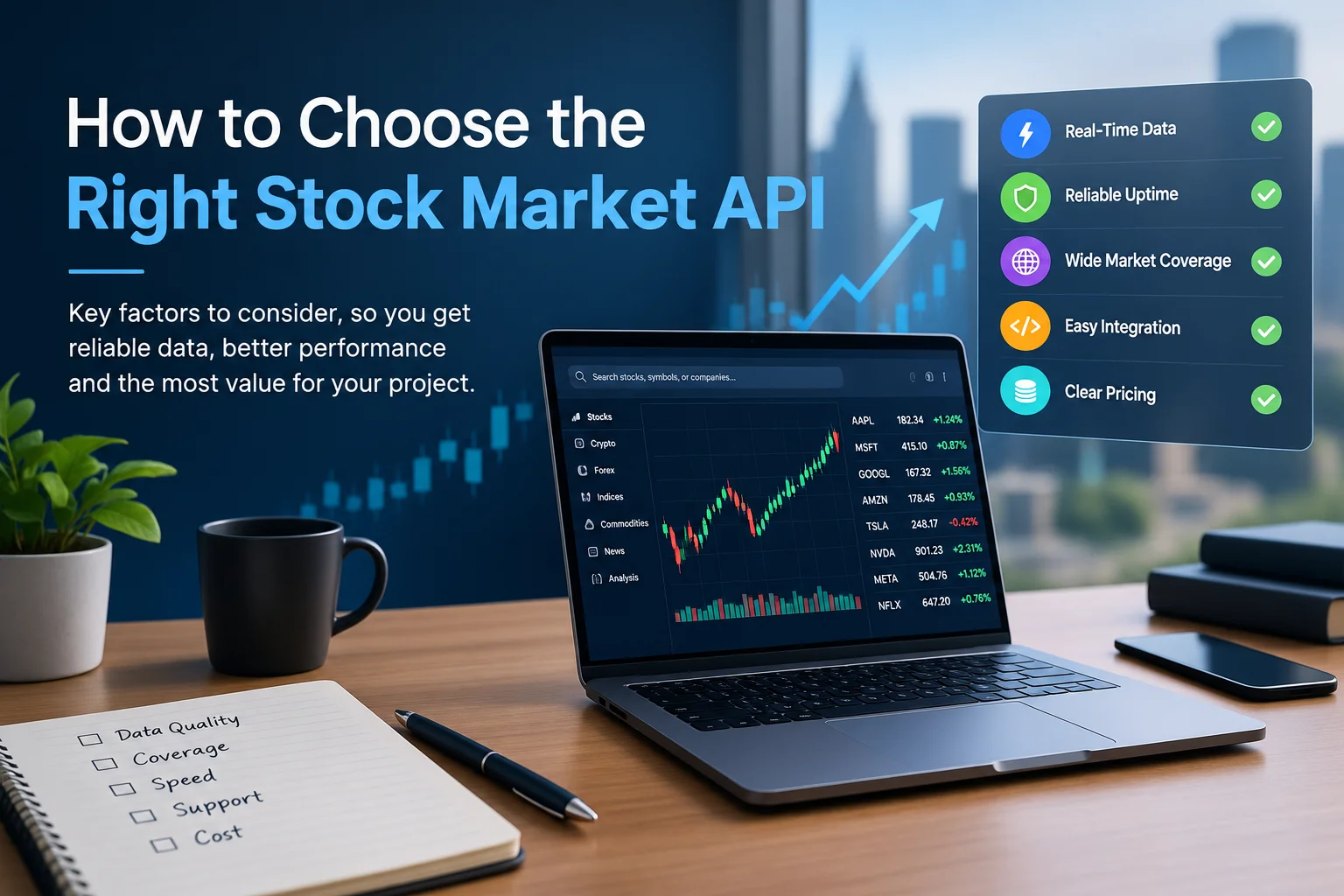
Choosing a Real Time Stock Market API requires more than checking whether it provides stock prices. Developers should consider several factors before integrating an API into a project.
Market coverage is one important factor. An application may need data from a particular exchange or multiple markets around the world. A provider with broad coverage can be useful for applications serving users across different regions.
Update frequency is another major consideration. Developers should understand how often market information is refreshed and whether the available data meets their application's requirements.
Historical data is also valuable. Even when an application focuses on current market prices, historical information can be used for charts, comparisons, and financial analysis.
API documentation should also be reviewed carefully. Clear documentation can make integration easier by explaining authentication, endpoints, parameters, response structures, and usage limits.
Real Time Stock Market API for Developers
Developers use stock market APIs in many different types of projects. A simple website may use an API to display stock prices, while a more advanced application may use market data for dashboards, screeners, portfolio tools, and research systems.
A stock market API can also reduce the amount of infrastructure developers need to build themselves. Instead of creating a complete system for collecting, storing, and organizing market information, developers can connect their application to an existing financial data platform.
This allows development teams to focus more on the user interface and application functionality. They can decide how the market data should be displayed and what features should be built around it.
Programming languages such as JavaScript, Python, PHP, Java, and other technologies can be used to work with financial APIs, depending on the provider and project architecture.
Building Stock Market Dashboards
One common use of real-time market data is building a stock market dashboard. A dashboard can bring multiple pieces of financial information into one interface.
For example, users might see stock prices, daily changes, trading volume, and charts on the same screen. The application can request updated information from an API and refresh the relevant sections as new data becomes available.
A well-designed dashboard can make complex financial information easier to understand. Instead of looking at raw data, users can see information presented through tables, charts, and visual indicators.
This approach is useful for financial websites, research platforms, investment applications, and educational tools.
Real Time Stock Data and Historical Data
Current market information and historical information serve different purposes, and both can be useful.
Real-time data helps users monitor what is happening in the market now. Historical data helps users understand what happened previously. When combined, they can provide a broader view of market behavior.
For example, an application could show the current price of a stock while also displaying a historical chart covering the previous month or year. This gives users both current information and historical context.
Developers can also use historical data to create performance comparisons and other analytical features, depending on the available API endpoints.
Benefits for Financial Websites
Financial websites need reliable market information to keep their content useful. A website that displays stock prices can use an API to update market information without requiring constant manual work.
A Real Time Stock Market API can also support additional features. A website may combine stock prices with market news, charts, economic updates, and educational content.
This can create a more complete financial information experience. Users can follow prices while also learning about broader market trends and events.
For businesses, API-based data delivery can also make it easier to scale financial products as their requirements grow.
How FCS API Supports Financial Market Applications
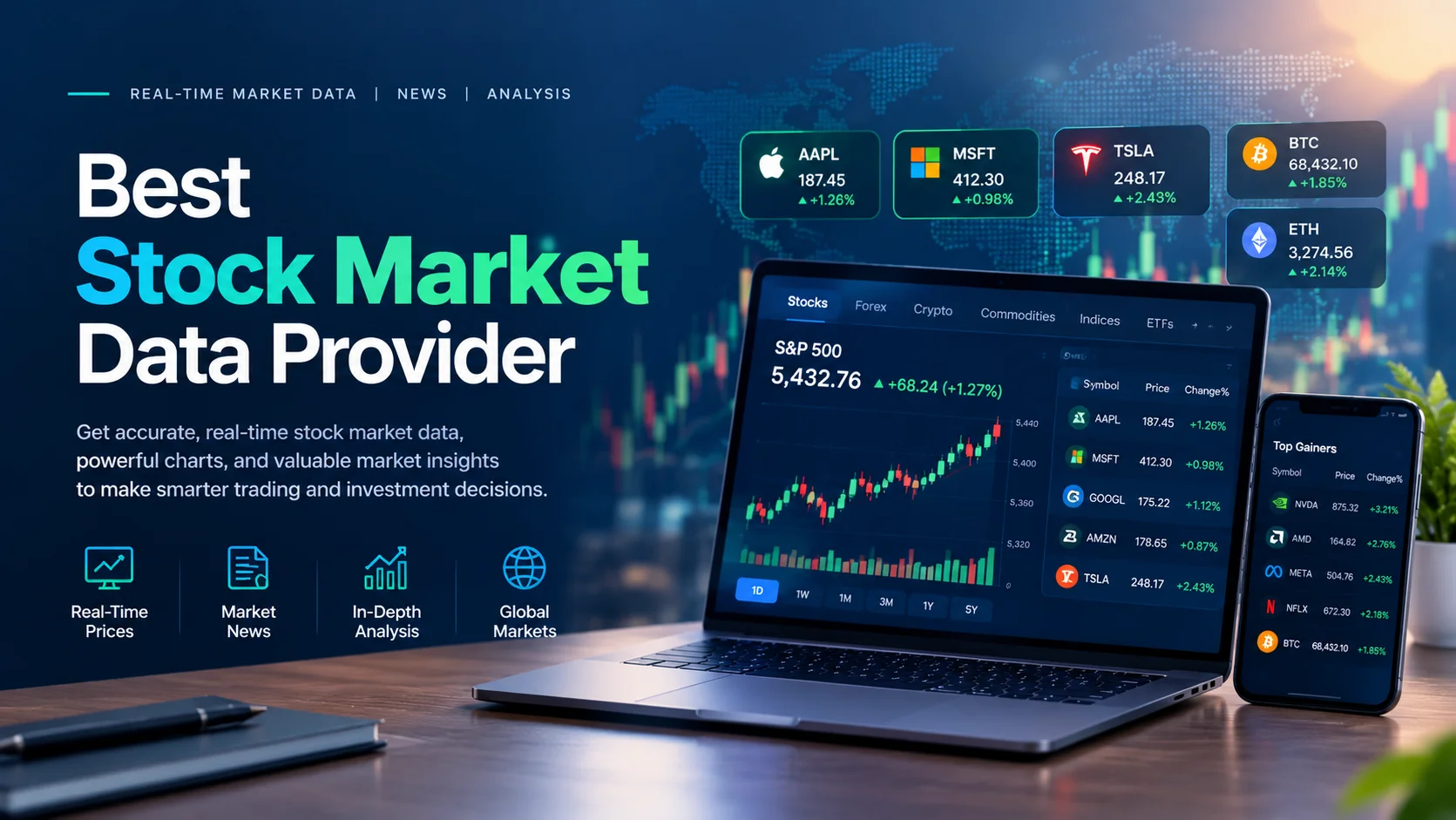
FCS API is a financial information platform that provides financial API access to real-time market data, news, and analysis for global financial markets. Its coverage includes stocks as well as cryptocurrencies, forex, commodities, ETFs, and indices.
This broad coverage can be useful for developers who want to build applications that go beyond a single financial market. A platform may begin with stock information and later add cryptocurrency prices, currency data, commodities, or index information.
FCS API also provides charts, economic updates, and educational content. These resources can help users follow market trends and develop a better understanding of financial information.
For developers, access to structured financial data can provide a foundation for creating customized financial websites, dashboards, research tools, and other market-focused applications.
Choosing the Right Real Time Stock Market API
The right API depends on what an application needs. Before choosing a provider, developers should understand their required markets, data types, update frequency, historical coverage, and technical requirements.
It is also important to review API limits and pricing. A small application may have relatively low data requirements, while a larger platform may need more requests and broader market coverage.
Documentation and technical support can also make a major difference. Developers should be able to understand how the API works and how to handle responses and errors.
Security should not be ignored either. API credentials should be handled properly, and developers should follow the provider's recommended authentication and integration practices.
The Future of Real Time Financial Data
The demand for accessible financial data continues to grow as more financial services move online. Websites, mobile applications, investment tools, and research platforms increasingly depend on APIs to connect with market information.
Future applications may combine real-time financial data with advanced analytics, automated notifications, artificial intelligence, and personalized dashboards. These technologies all depend on reliable data as a foundation.