
February 15, 2026. You log in, see the screens, and there it is: Market Cap VVV, $ just blasted past everyone's expectations, hitting 173,193,332 bucks. A casual glance, and you'd think Christmas came early, especially with a solid +25.241% jump from its opening price of 138,288,475. It practically screams "Strong Buy" at first look.
Most of the big signals are aligned. We're talking high confidence, a strong trend, bullish price action. The candle pattern? Normal. Everything in the front office is high-fiving. But if you’re actually looking at the numbers, truly scrutinizing the data that runs through the FCS API, you’ll see the fly in the ointment. Or rather, a giant, screaming red flag.
The Glaring Contradiction: RSI Yelling "Sell"
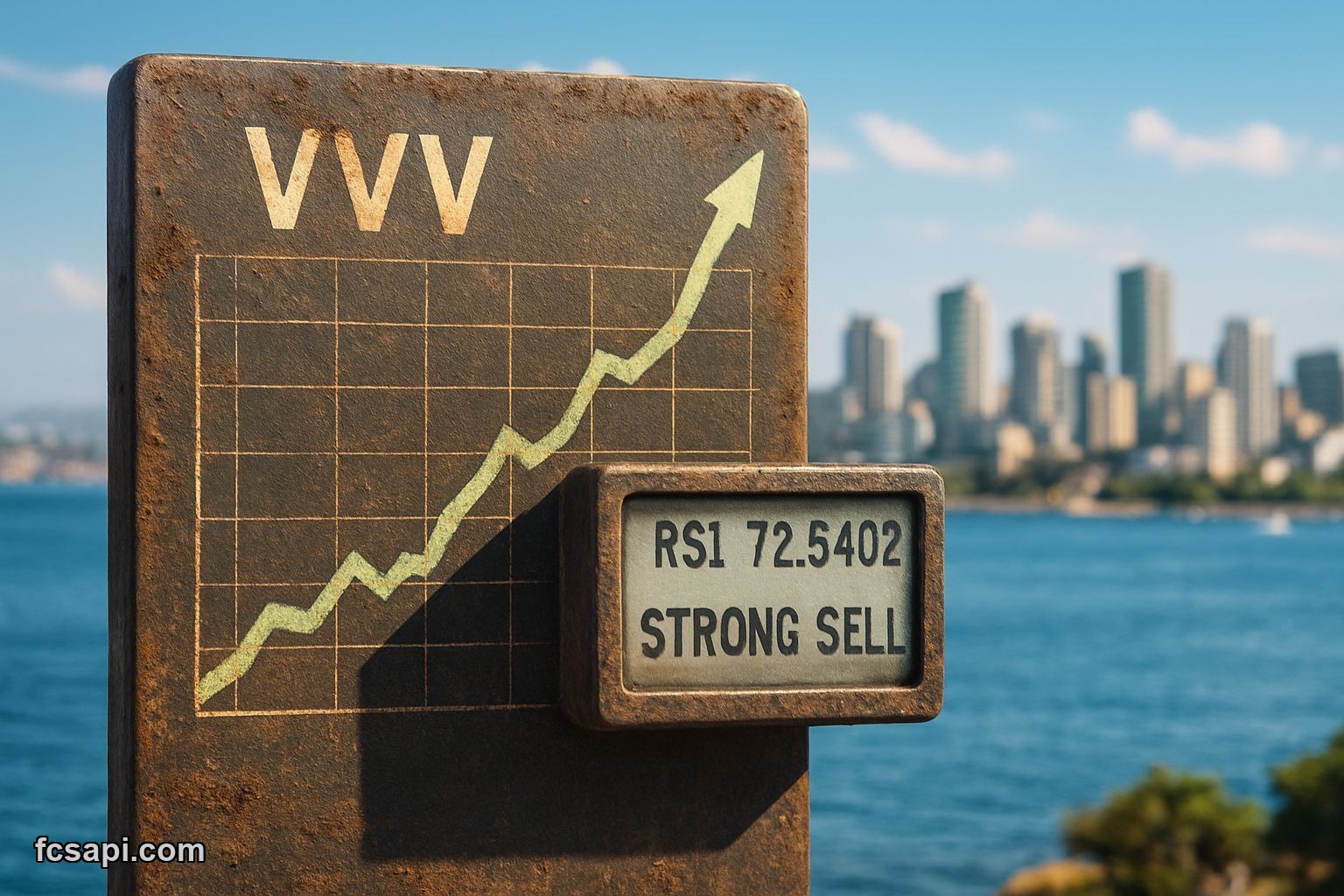
This is where it gets interesting, and honestly, a little alarming. While the overall sentiment is painted in vibrant green, a critical piece of the puzzle, the Relative Strength Index (RSI), is flashing "Strong Sell." It’s currently sitting at 72.6402, way up there. Not just "overbought," but explicitly a "Strong Sell."
And it's not alone. The Ultimate Oscillator, another momentum indicator, also suggests "Sell" at 75.1709. So, you've got the general market indicators roaring for more upside, while two distinct momentum checks are pulling hard on the reins. This kind of divergence isn’t just unusual; it’s a warning shot fired across the bow.
When I see this, it triggers a gut check. Remember that time I jumped into a tech stock just because the headlines were all roses, ignoring the nagging feeling from a single indicator? Cost me a fortune. You can't just pick and choose the data points you like; you have to confront the uncomfortable ones too. This is one of those times for Market Cap VVV, $.
All the Buy Signals (And Why They Might Be Tricky)
Let's not pretend it's all doom and gloom. There's plenty of evidence to support the bullish frenzy. The SMA 25 is a "Strong Buy" at 108,738,453, and the EMA 10 also registers a "Strong Buy" at 114,178,800.69. These are solid, widely respected moving averages, and they both point northward.
Even the Parabolic SAR, which is fantastic for tracking trends, shows a "Strong Buy" at 71,542,126.04. Pair that with the overarching "Strong" trend and "High" confidence, and you can see why many traders might be piling in. The Market Cap VVV, $ price today looks like a no-brainer for a quick buck, given these signals. It really does.
But here’s the rub: many of these indicators are inherently lagging. They confirm a trend once it's already in motion. They're great for riding a wave, but they don’t always tell you when that wave is about to crest. The impressive +25.241% daily change, while exciting, might itself be contributing to the overbought condition that the momentum oscillators are now highlighting. It’s a vicious, exhilarating cycle until it isn't.
Why Overbought Matters So Much
When the RSI screams "Strong Sell" at 72.6402, it means the asset has been bought up aggressively, possibly too quickly, pushing its value far beyond what its recent average suggests is sustainable. This isn't just a casual warning; it often precedes a significant pullback or consolidation. The Market Cap VVV, $ is moving like a sprinter who’s forgotten the marathon part of the race.
The Ultimate Oscillator, chiming in with its "Sell" signal at 75.1709, simply reinforces this. It measures buying and selling pressure across different time frames, and when it’s this high, it’s basically telling you that every last buyer has already jumped in. There aren't many fresh funds left to push it higher without a break.
This isn't theory. This is where you see accounts blow up because greed takes over. I got burnt a few years back on a commodity play, thought it was going to the moon. Ignored a sky-high RSI. The price kept inching up, lulling me into a false sense of security, then crashed hard. Watching your gains vanish in a blink isn't fun. For more discussions on market reversals, check out our blog.
Bollinger Bands, Volatility, and Pivots: More Red Flags
Let's dig into the nitty-gritty. The Bollinger Bands show the current price is at 83.07% of the band. That means it’s near the top, hugging that upper band, and the Middle Band is way down at 108,738,453. This screams overextension. Sure, the Squeeze is "Normal," meaning no immediate massive breakout or breakdown is telegraphed by the bands themselves, but the position within them, combined with the RSI, is concerning.
Volatility is "High," with an ATR% of 13.0294. High volatility means big swings are par for the course. When you combine high volatility with an asset that's deeply overbought, you're not looking at a stable climb; you're looking at a potential cliff edge. The higher the volatility, the more dramatic any reversal could be. For those navigating multiple assets and currencies, sometimes a quick visit to a currency converter can help put figures into clearer perspective, especially when market movements are this erratic.
Now, the pivot points.
| Pivot System | R1 (Resistance 1) | P (Pivot) | S1 (Support 1) |
|---|---|---|---|
| Demark | 152,869,650 | 133,150,004 | 125,818,731 |
| Woodie | 151,732,563.5 | 132,581,460.75 | 124,681,644.5 |
The current Market Cap VVV, $ price, at 173,193,332, is significantly above both Demark R1 and Woodie R1. Usually, breaching R1 is a huge bullish sign, confirming momentum. But when the RSI is screaming "Strong Sell," this breakout isn't necessarily strength; it might just be the final, unsustainable surge, a last gasp of buying pressure before gravity kicks in.
These R1 levels, typically resistance points, could very quickly become the first major targets for a retest as support if a correction begins. It means the Market Cap VVV, $ forecast for 2026 needs to account for this potential re-evaluation of current levels. Ignoring it would be like driving blindfolded.
Performance Context and My Market Cap VVV, $ Prediction
Let's look at the asset's recent performance to put things into perspective.
- 1-Month Low: 67,420,269
- 1-Month High: 187,498,886
- All-Time Low: 37,183,179
The current Market Cap VVV, $ price of 173,193,332 is uncomfortably close to its 1-Month High. It's not just a little extended; it's practically at the peak of its recent climb. This isn't a fresh breakout from a long consolidation; it's pushing the upper limits of what it’s done recently. This adds another layer to the "overbought" narrative.
So, what's the Market Cap VVV, $ prediction for 2026? A sustained, healthy rally requires periodic pullbacks. Given the conflict between the strong overall signal and the screaming "Strong Sell" from the RSI, a significant correction is not just possible, but probable. I would expect a pullback towards those R1 pivot levels, perhaps even the main pivot points, before any new, sustainable upward movement can establish itself.
It’s tempting to follow the crowd, especially when there’s a massive +25.241% daily change flashing on the screen. But the smarter play here, the move that keeps your capital safe, is to be patient. I wouldn't be buying this asset right now. I'd be waiting for the market to digest this parabolic move and for those momentum indicators to cool off before considering any long positions.
I’m on the sidelines for Market Cap VVV, $. The market always gives you another chance.