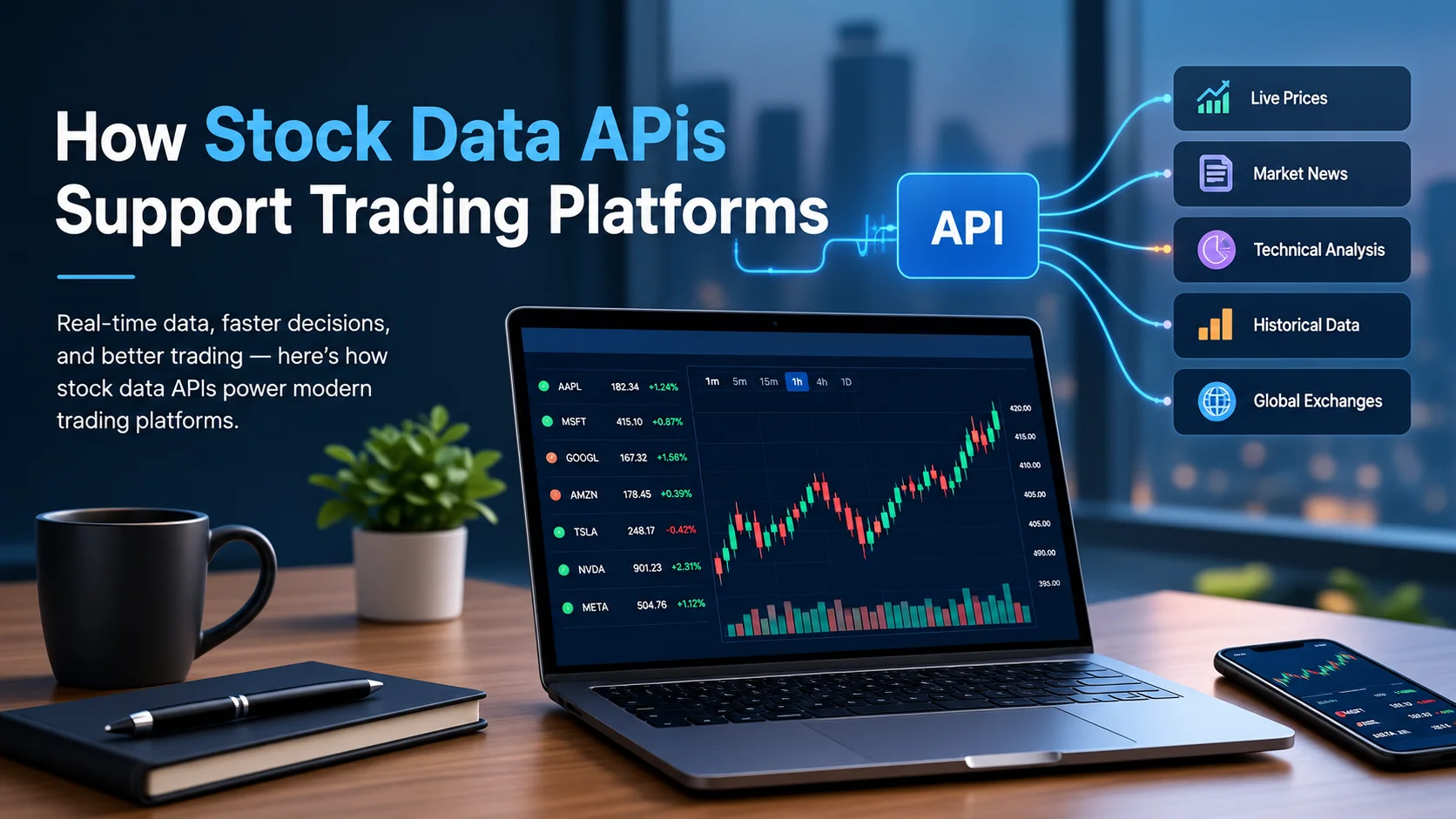

Financial markets move quickly, and having access to accurate market information is important for traders, investors, developers, and financial businesses. Stock prices can change within seconds, trading volumes can rise or fall quickly, and market trends can shift because of news or economic events. For this reason, many modern financial platforms use a stock exchange data API to access structured market information and deliver it directly to websites, applications, dashboards, and other financial tools.
A stock exchange data API works as a connection between financial data sources and software applications. Instead of collecting stock information manually, developers can use an API to request market data and display it in their applications. This makes it easier to build financial dashboards, stock trackers, trading tools, portfolio applications, and market analysis platforms.
For businesses and developers working with financial information, an API can reduce the complexity of collecting and organizing stock market data. Platforms such as FCS API provide financial API solutions covering stocks and other global markets, helping users access market information in a more convenient and structured way.
What Is a Stock Exchange Data API?
A stock exchange data API is a software interface that allows an application to request stock market information from a financial data provider. The API receives a request and returns relevant data in a structured format that software can process.
Depending on the provider, the available information may include stock prices, market symbols, trading volume, historical prices, market changes, and other financial information. This data can then be used inside websites, mobile applications, financial dashboards, or internal business systems.
For example, a developer building a stock tracking application may need the latest price of a particular company. Instead of manually entering the price, the application can send a request to the API. The API can return the latest available information, allowing the application to update its interface automatically.
This approach is useful because financial applications often need consistent data without requiring developers to create their own market data collection systems from the beginning.
Why Stock Exchange Data Is Important
Stock exchange data provides valuable information about how financial markets are performing. Investors use prices and historical information to understand market movements, while traders may monitor changes over shorter periods to identify potential opportunities.
Developers also need reliable data when building financial applications. A stock dashboard, for example, may display current prices, percentage changes, trading volume, and historical charts. Without a dependable data source, keeping this information updated can become difficult.
Businesses can also use market data for research, reporting, financial analysis, and customer-facing tools. As financial technology continues to grow, access to structured market data has become an important part of building modern financial products.
A stock exchange data API helps simplify this process by providing data in a format that applications can work with efficiently.
How a Stock Exchange Data API Works
The basic process is relatively simple. A developer first connects an application to an API using the provider's documentation and access credentials. The application then sends a request for specific market information.
The request may contain details such as a stock symbol, market, data type, or time period. The API processes the request and returns the available information. The application can then use that response to display prices, create charts, calculate changes, or perform additional analysis.
Most financial APIs return data in structured formats such as JSON. This makes the information easier for programming languages and applications to process. Developers can use common technologies such as JavaScript, Python, PHP, Java, or other programming languages to work with API responses.
The technical implementation can vary between providers, but the main purpose remains the same: connect an application with financial market data in an automated way.
Benefits of Using a Stock Exchange Data API
One of the main benefits of a stock exchange data API is automation. Developers do not need to manually collect stock prices every time they want to update an application. The software can request new information automatically according to its requirements.
Another benefit is scalability. A financial platform may need to monitor many stocks instead of just one or two. Using an API can make it easier to request and organize large amounts of market information within an application.
APIs can also make financial applications more useful. Developers can combine stock prices with charts, historical information, news, and other market indicators to create a more complete user experience.
Another important advantage is development efficiency. Building an entire financial data collection infrastructure can require significant technical resources. Using an established API provider allows developers to focus more on the application itself rather than building every part of the data system from scratch.
Real-Time Stock Market Data and APIs
Real-time or near-real-time market information can be particularly useful for applications that need frequently updated prices. Traders and active market participants may want to monitor price movements as they happen, while financial websites may want to display current market information to their visitors.
A stock exchange data API can provide the connection needed to bring this information into an application. The exact speed and availability of data depend on the provider, exchange, endpoint, subscription plan, and other technical factors.
When selecting an API, developers should understand the provider's data frequency and coverage. It is important to choose a solution that matches the application's requirements instead of assuming that every API provides identical market data.
Historical Stock Exchange Data
Current prices are only one part of financial analysis. Historical stock exchange data can also be valuable because it allows users to study previous market behavior.
Historical data can be used to create price charts, compare performance over different periods, test analytical strategies, and understand long-term market trends. Developers can use historical API endpoints to retrieve information for selected stocks and time ranges, depending on what the provider supports.
For example, a financial application could combine historical prices with charts to help users visually understand how a stock has performed over months or years. This can make raw financial data easier to understand.
Choosing the Right Stock Exchange Data API
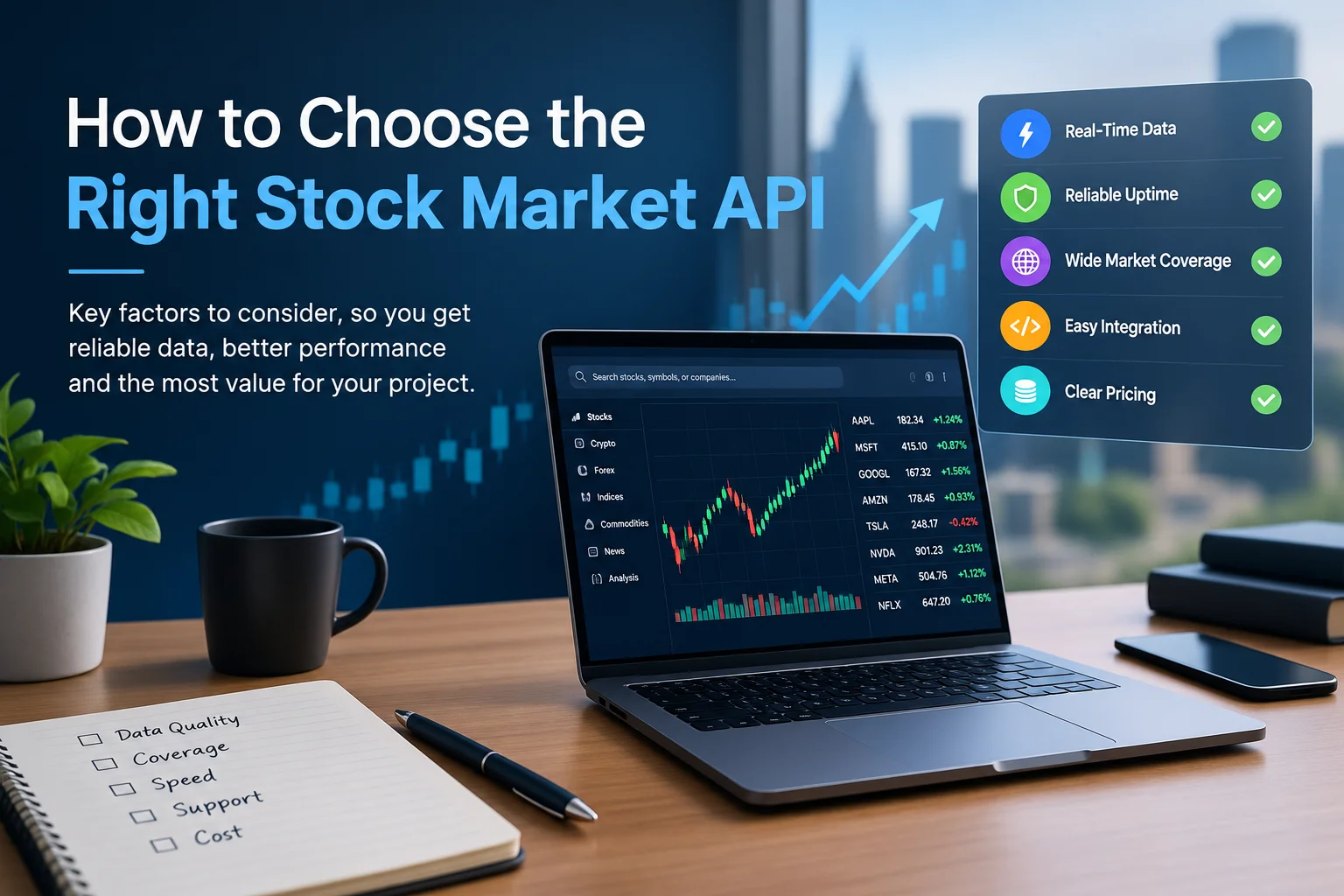
Choosing an API should depend on the needs of the project. Developers should consider factors such as market coverage, available endpoints, update frequency, historical data availability, documentation, response format, reliability, and pricing.
Market coverage is particularly important for applications that track stocks from multiple exchanges or regions. An API that supports a broad range of financial markets can reduce the need to connect several different data providers.
Documentation is another important consideration. Clear documentation helps developers understand authentication, endpoints, parameters, response formats, and usage limitations. Good documentation can significantly reduce development time and make integration easier.
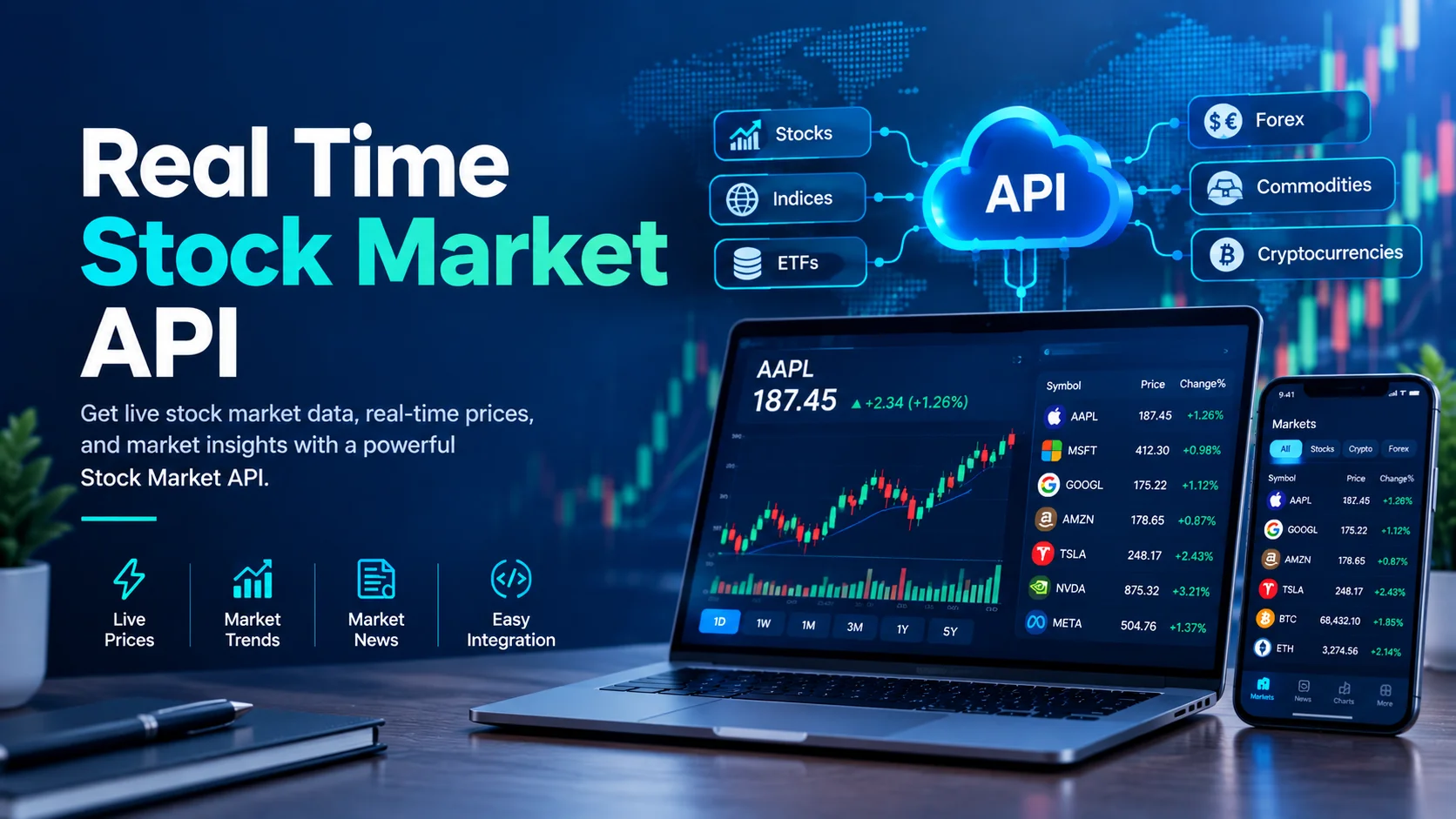
It is also useful to consider whether the provider offers other financial data. A platform that supports stocks along with forex, cryptocurrencies, commodities, ETFs, and indices may be more convenient for applications that cover multiple asset classes.
Building Financial Applications With Market Data APIs
Stock exchange data APIs can support many different types of applications. Developers can use market data to create stock tracking websites, investment dashboards, portfolio management tools, financial research platforms, market monitoring systems, and educational applications.
For example, a website could use stock data to display current market prices and percentage changes. Another application could use historical information to generate interactive charts. A more advanced financial platform could combine stock data with news, economic information, and other market indicators.
The API becomes the data layer that connects financial information with the application's interface and functionality.
How FCS API Supports Financial Data Applications
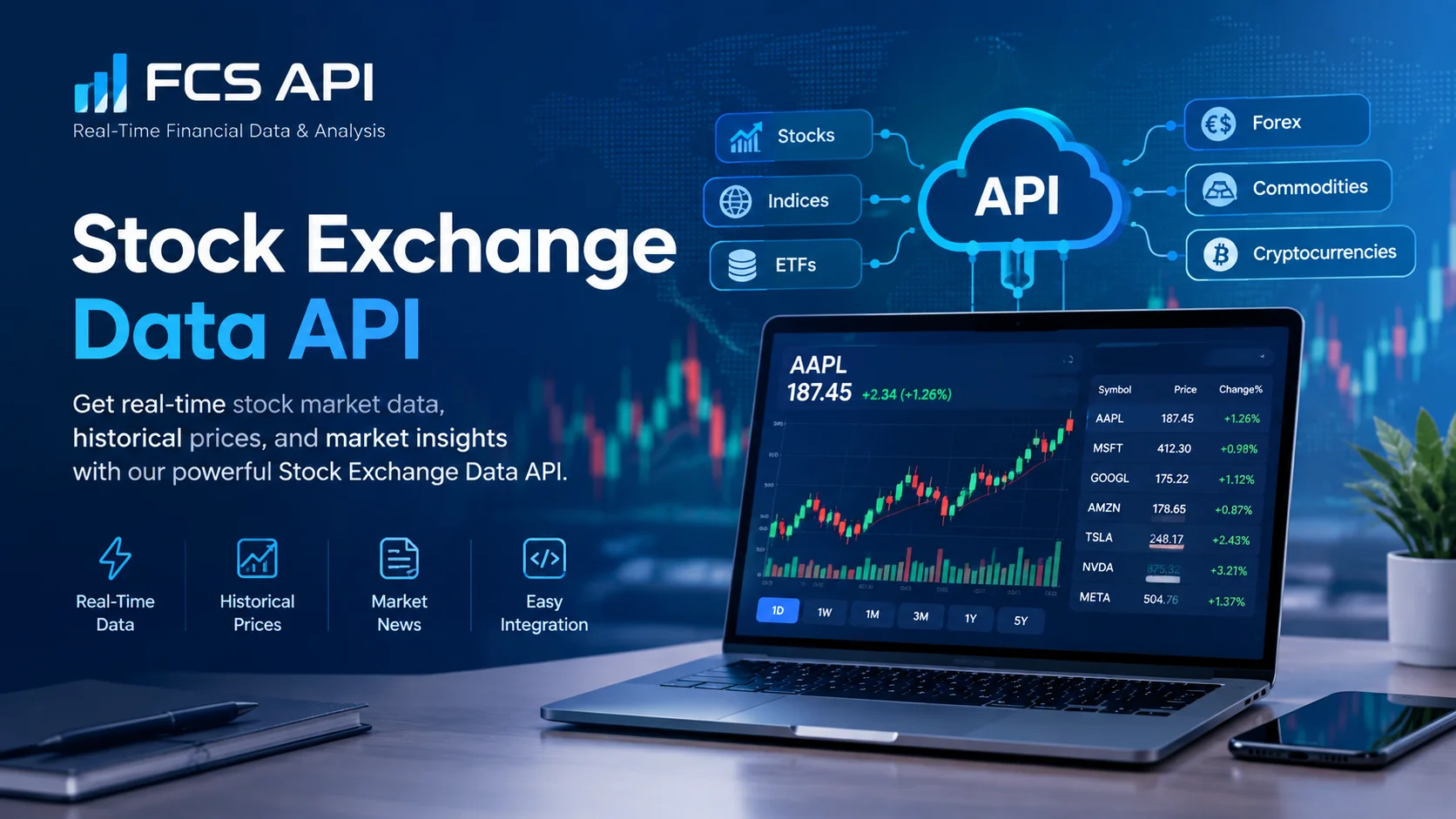
FCS API is a financial information platform designed to provide financial API access to market data, news, and analysis for global financial markets. Its coverage extends beyond stocks and includes cryptocurrencies, forex, commodities, ETFs, and indices.
This broader market coverage can be useful for developers and businesses building financial applications that need information from multiple asset classes. Instead of focusing only on stock exchange information, users can work with different types of financial market data through a financial information platform.
FCS API also provides charts, economic updates, and educational content that can support users who want to understand market movements and financial information more effectively.
The Future of Stock Market Data APIs
Financial technology continues to develop, and APIs are becoming an important part of modern financial applications. As more websites, mobile applications, trading platforms, and analytical tools depend on automated market information, the demand for structured financial data is likely to remain strong.
Future financial applications may combine market data with advanced analytics, automated alerts, artificial intelligence, and personalized dashboards. Reliable data will remain an important foundation for these technologies.
For developers, the key is not simply finding an API that provides stock prices. It is finding a data solution that offers suitable market coverage, reliable access, useful endpoints, and documentation that supports the needs of the application.